At a recent trip to our local Savers thrift store, my wife spotted four vintage Star Wars puzzles. I had one of them, so I left it behind for another collector, but we picked up the other three and have just started putting them together. Inside one of the boxes, my wife found a small Star Wars product catalog from 1978. These were included in all of the vehicles and other tie-in merchandise that were not carded action figures so kids could see what new Star Wars merchandise was available. Carded figures had plenty of photos of Star Wars toys (as you can see on the cards I have for Star Wars, Empire Strikes Back, and Return of the Jedi), but the booklets were reserved for larger packaging.
The catalog that came with the puzzle is in great shape, however, the glue that held the booklet together had basically come undone in the nearly 50 years since this booklet was printed. So, I went ahead and carefully pulled it apart and scanned it in. Here all the pages in a slideshow:
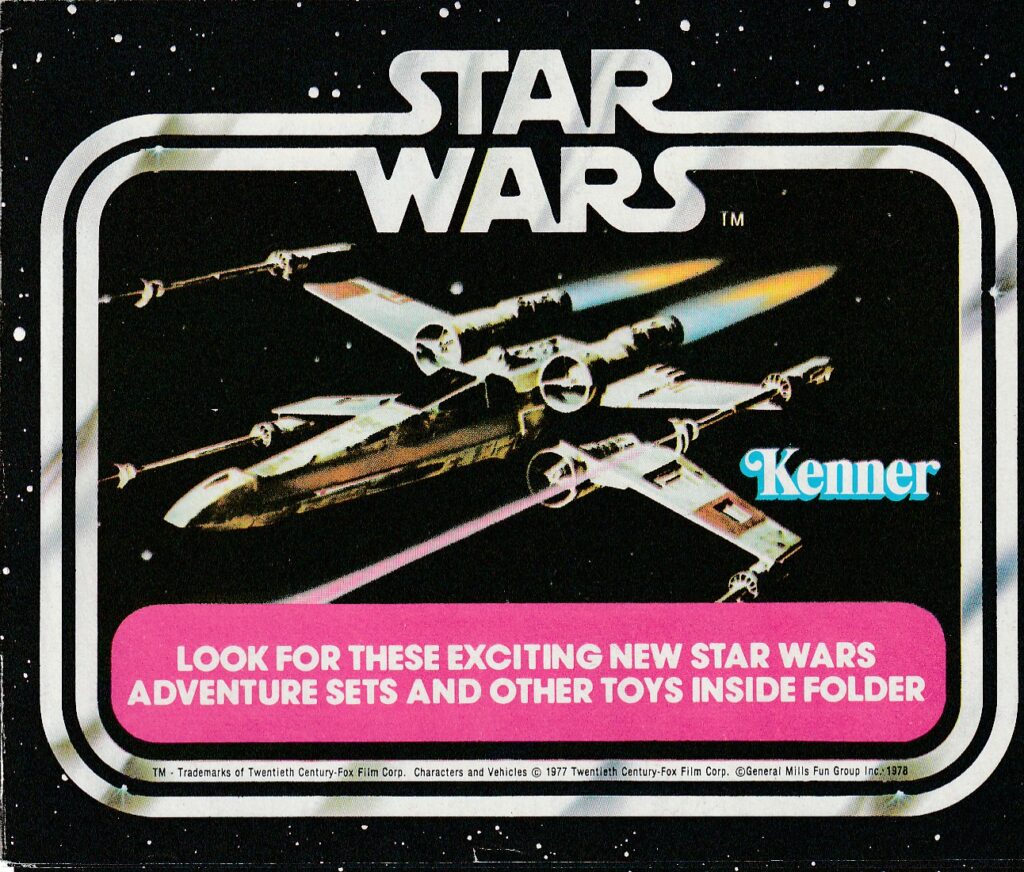
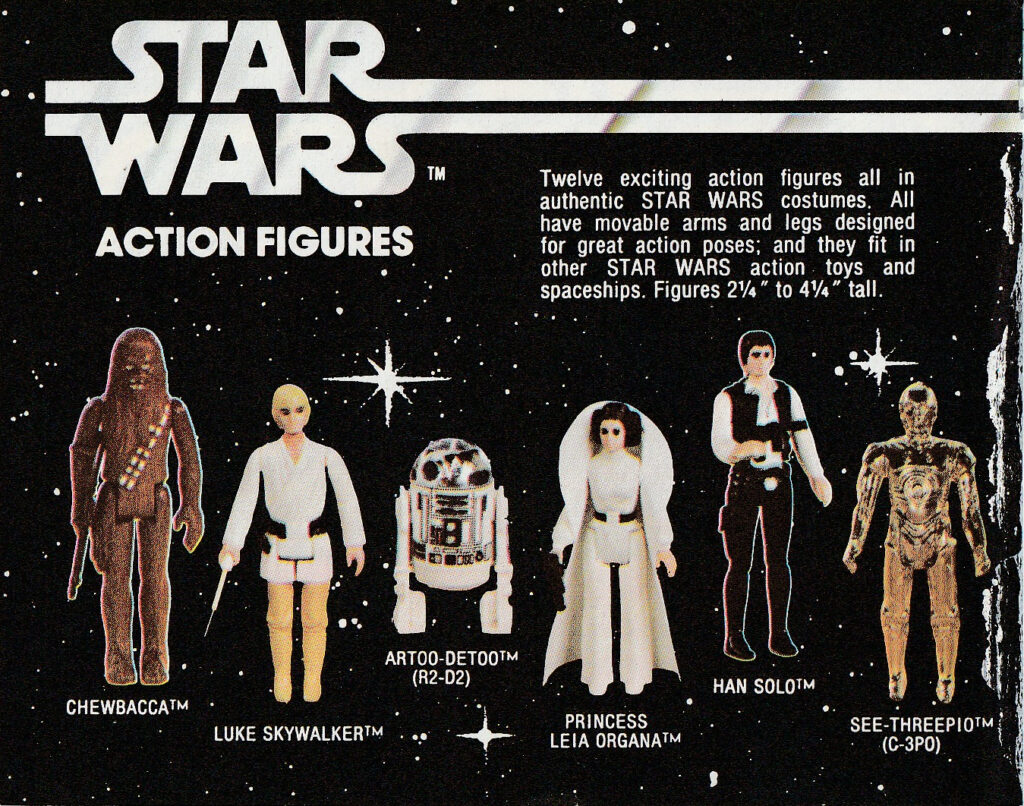
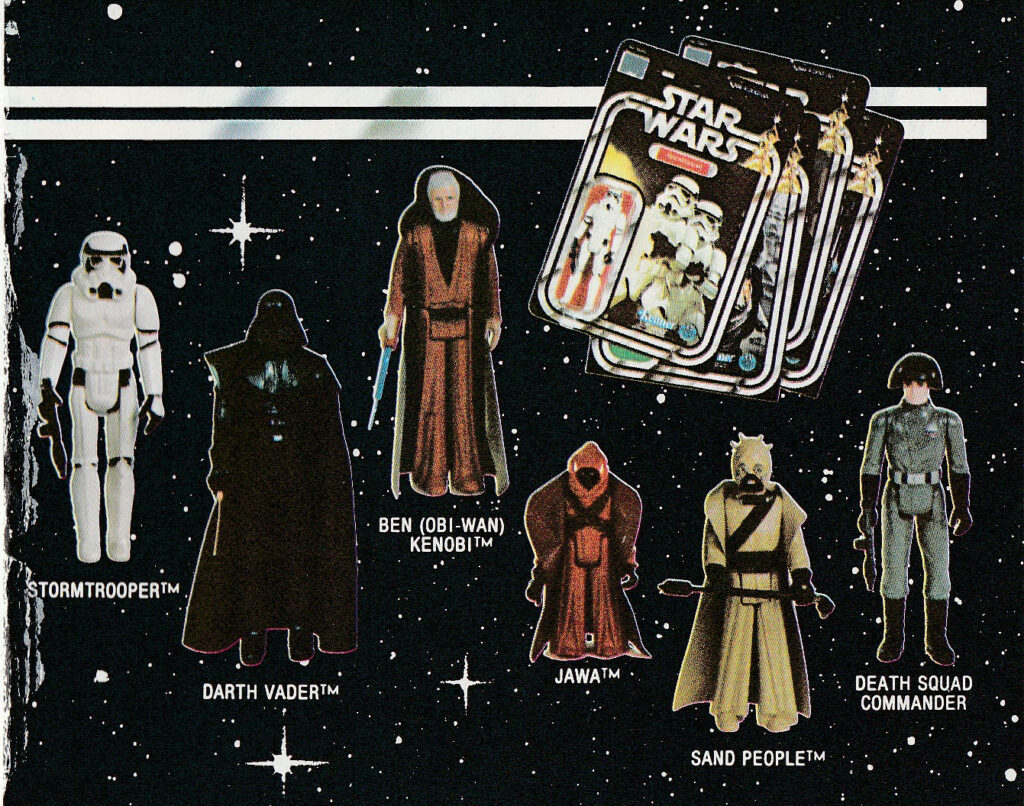

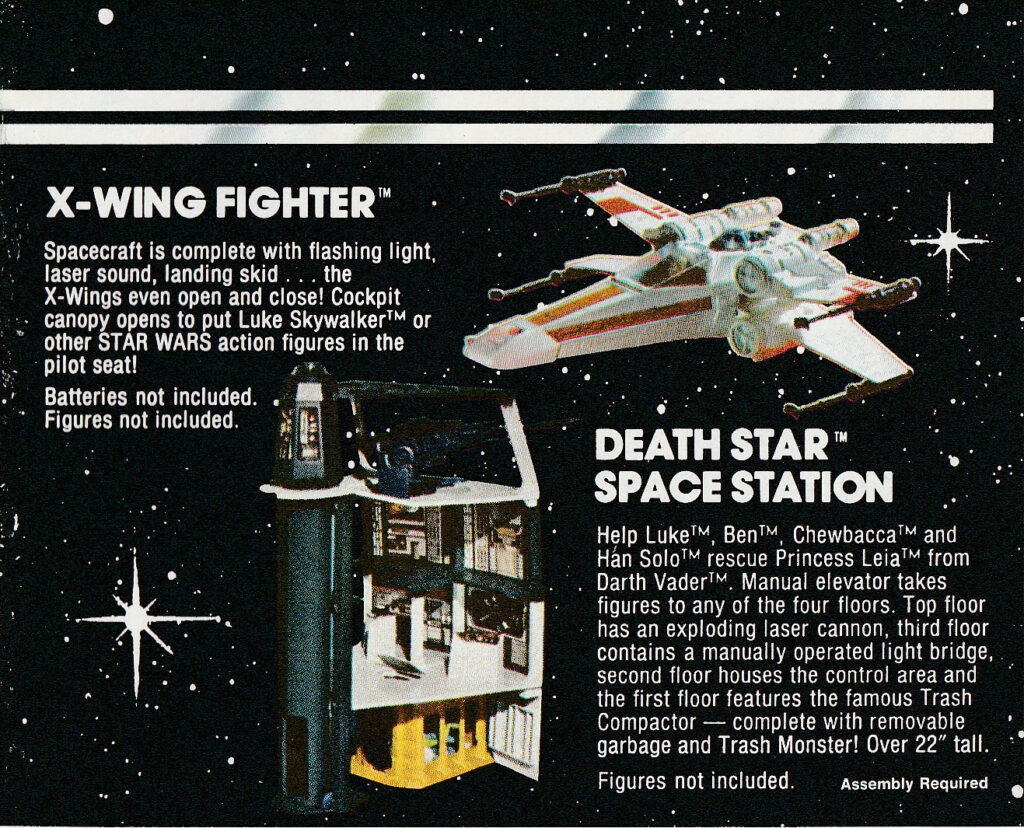
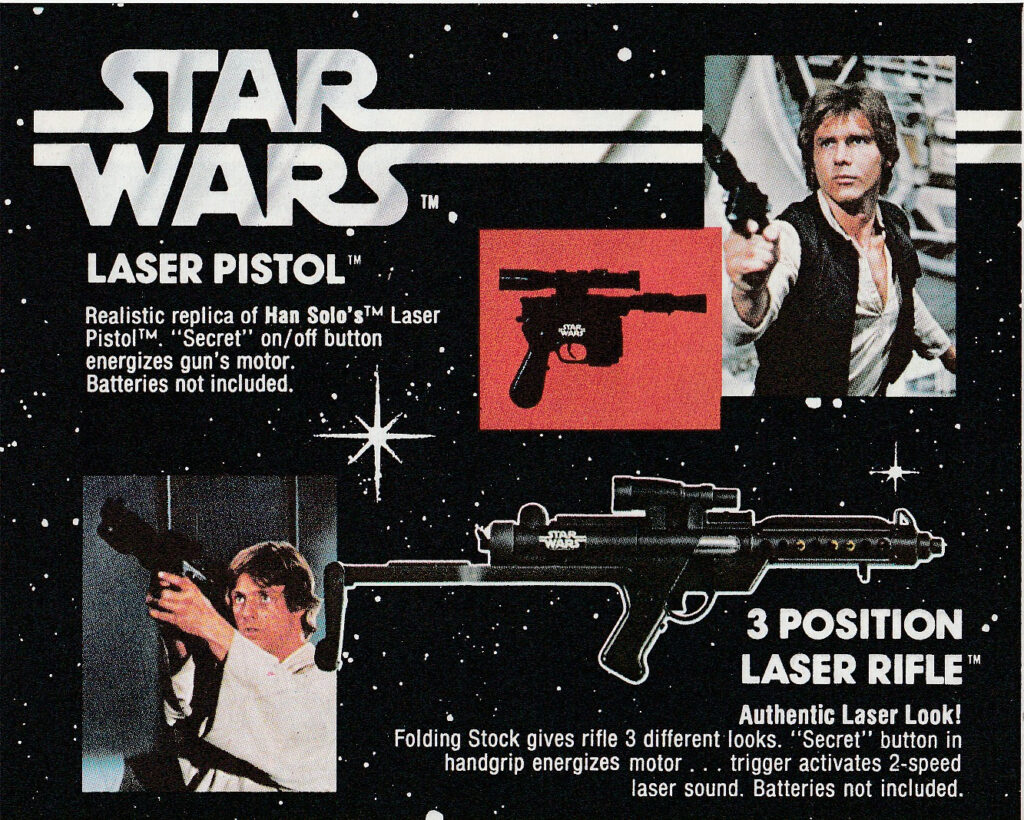
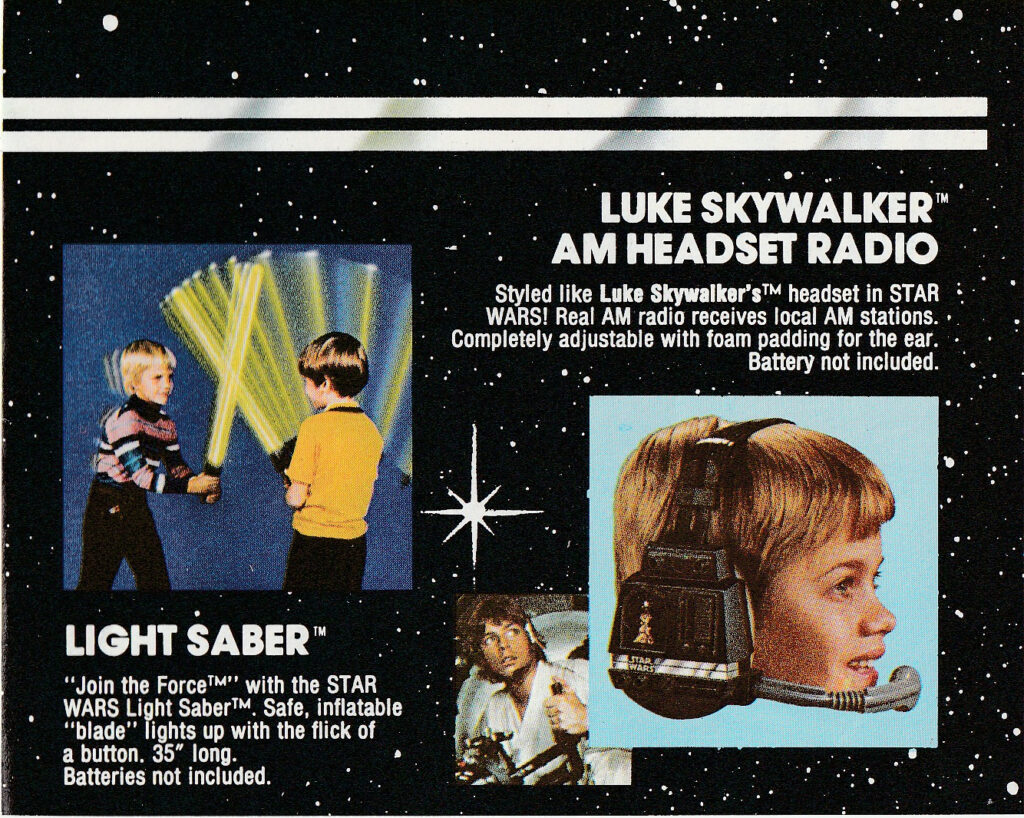
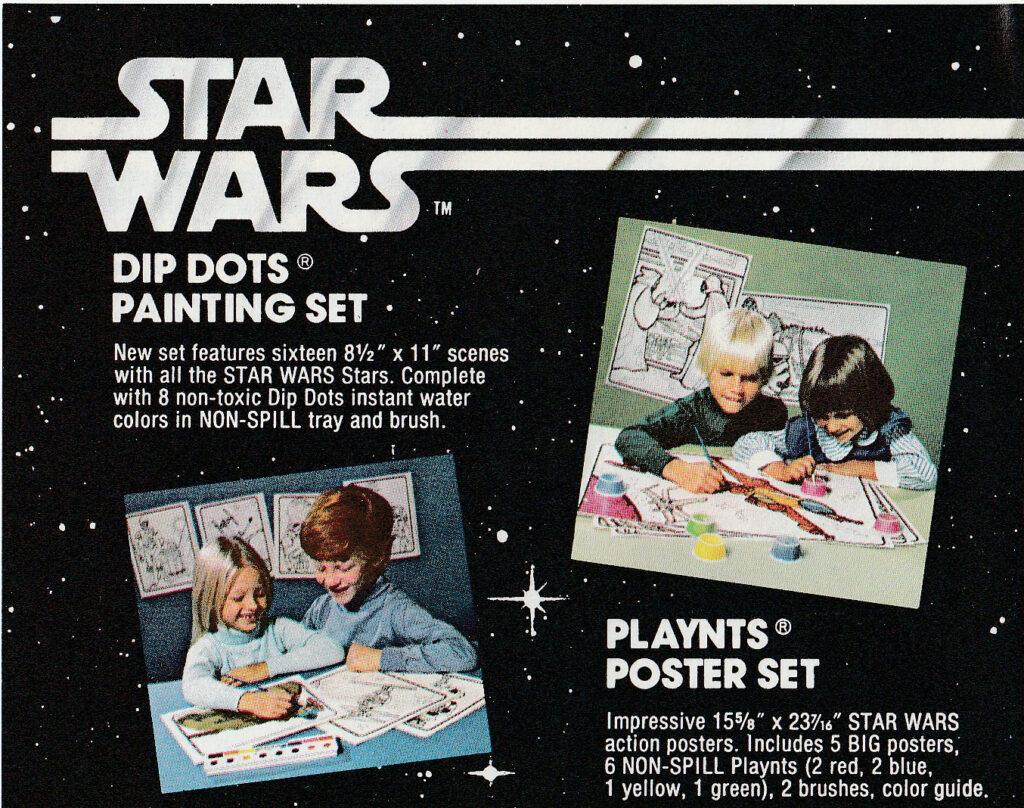
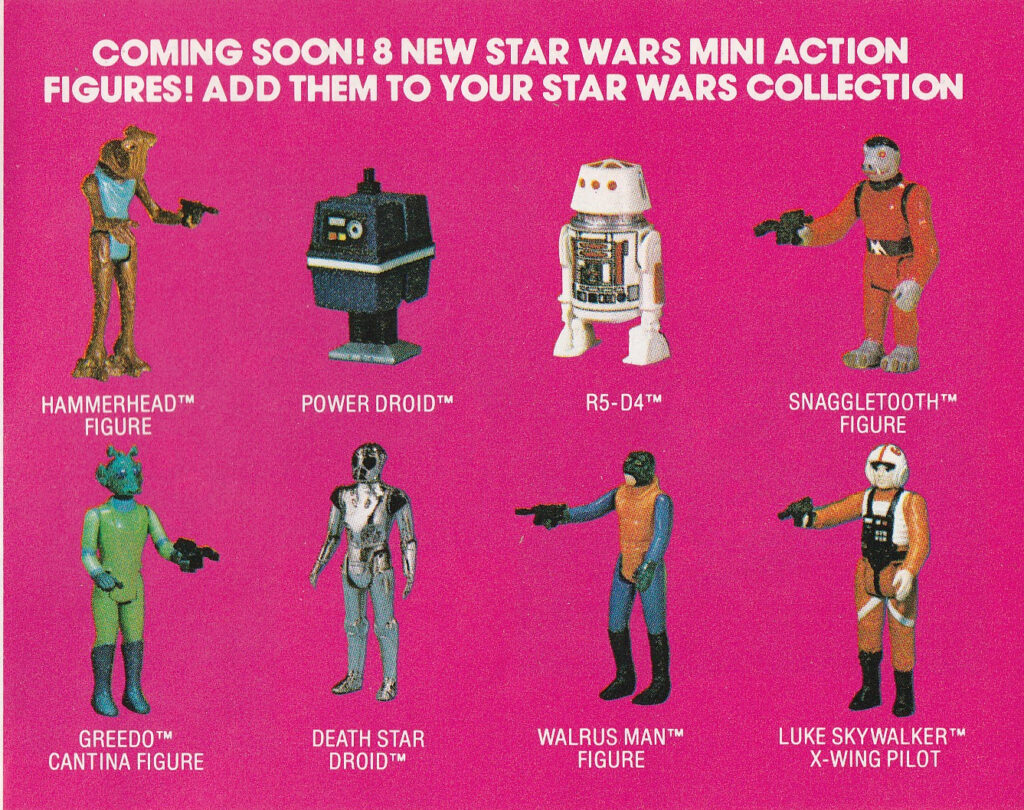
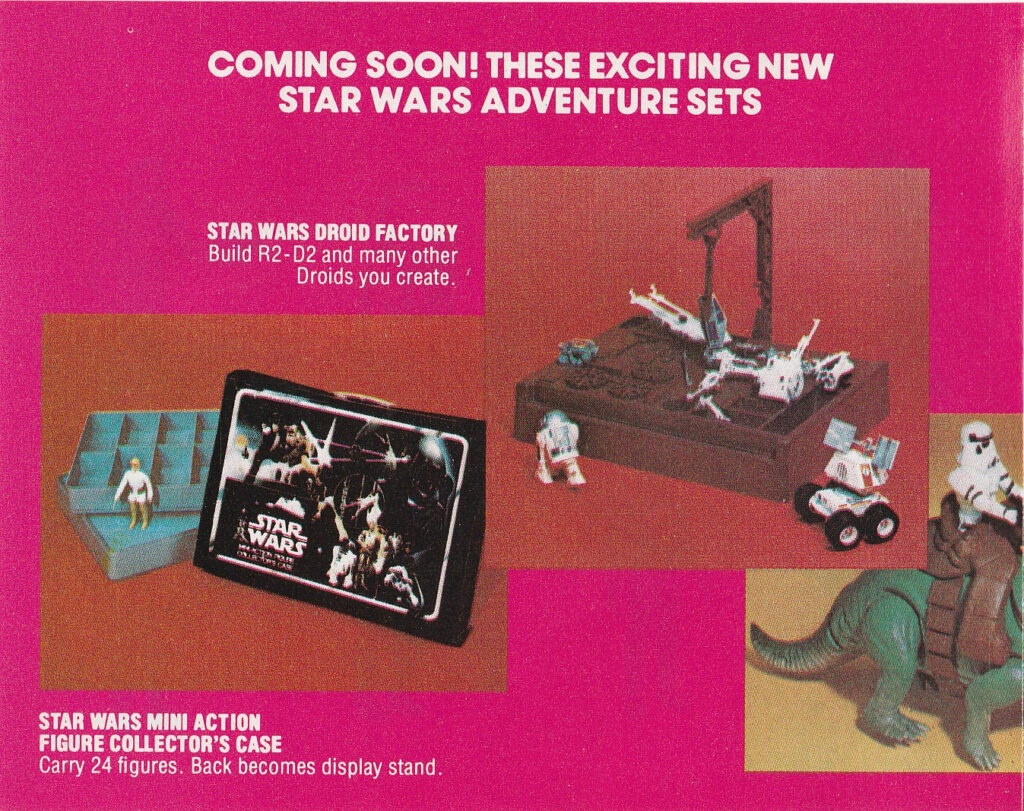

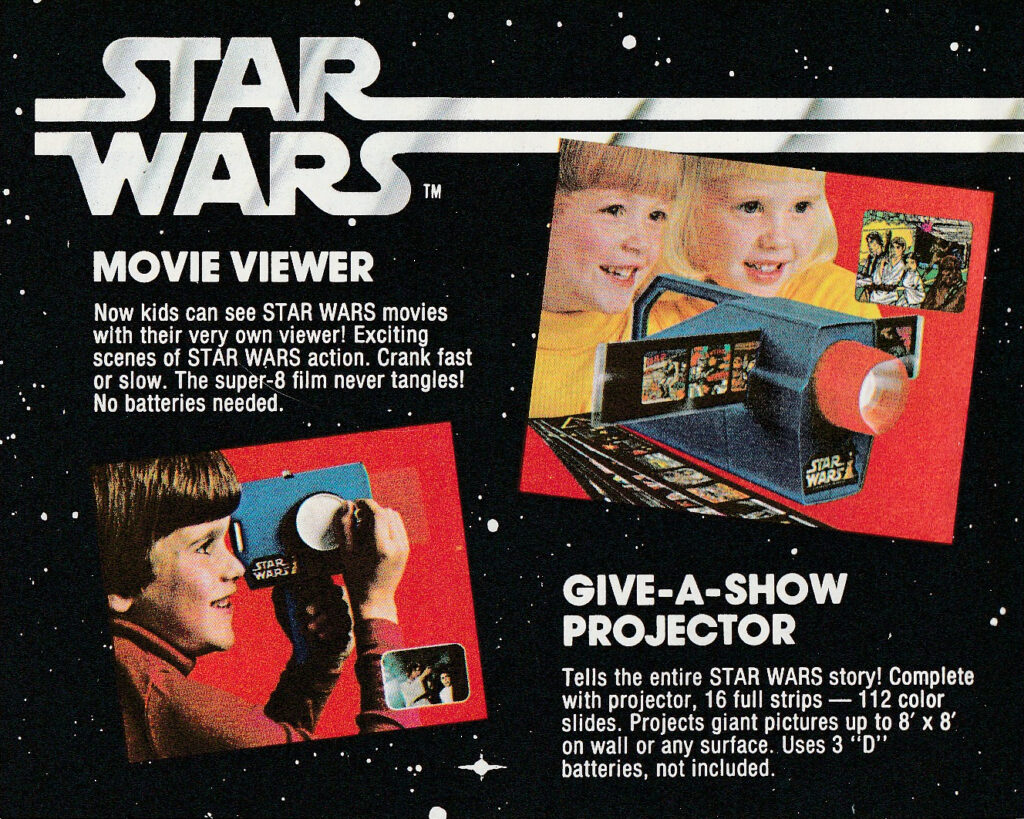
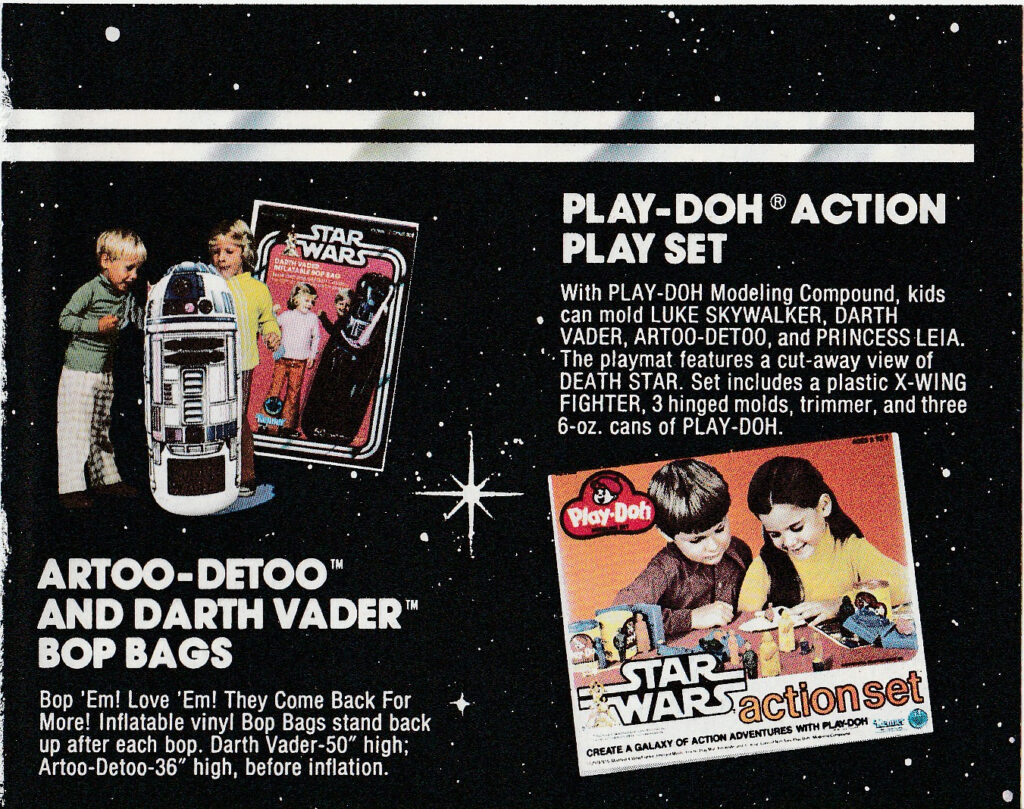
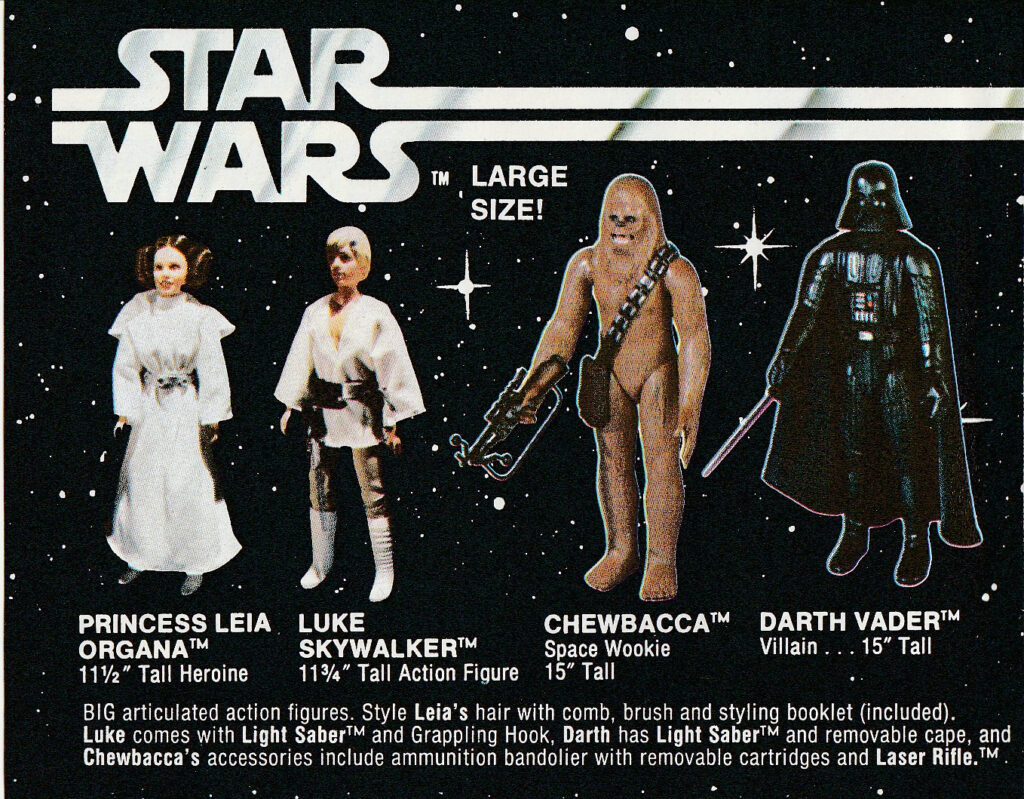
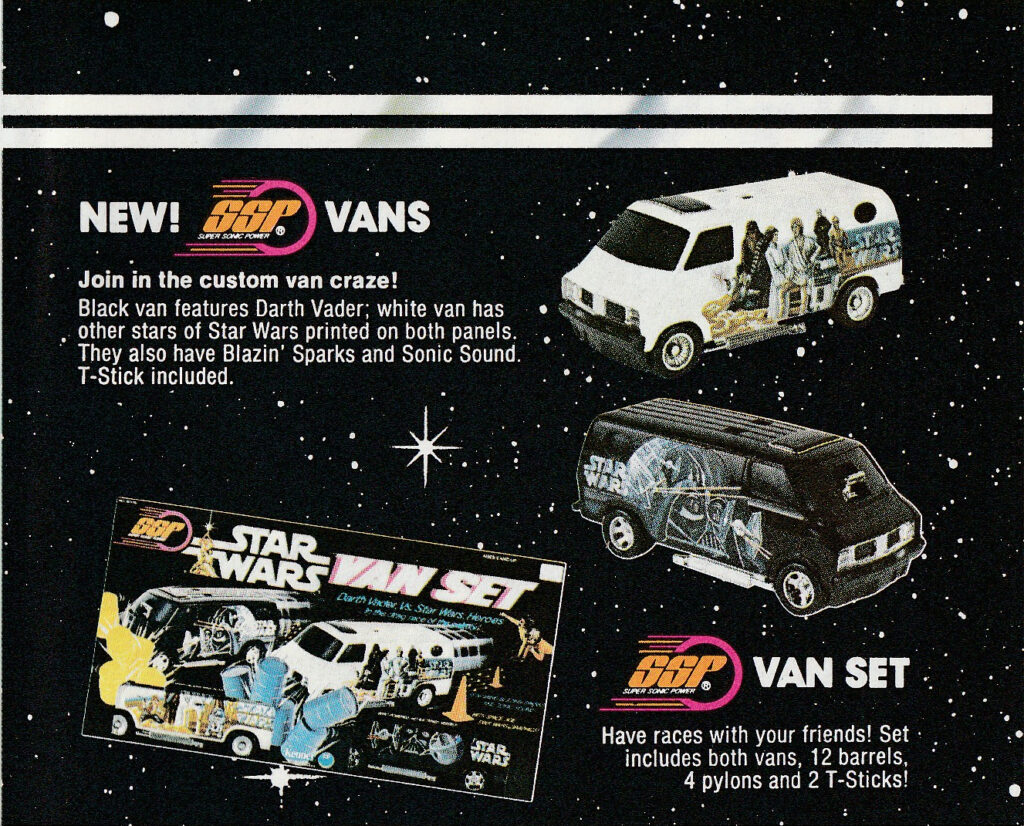
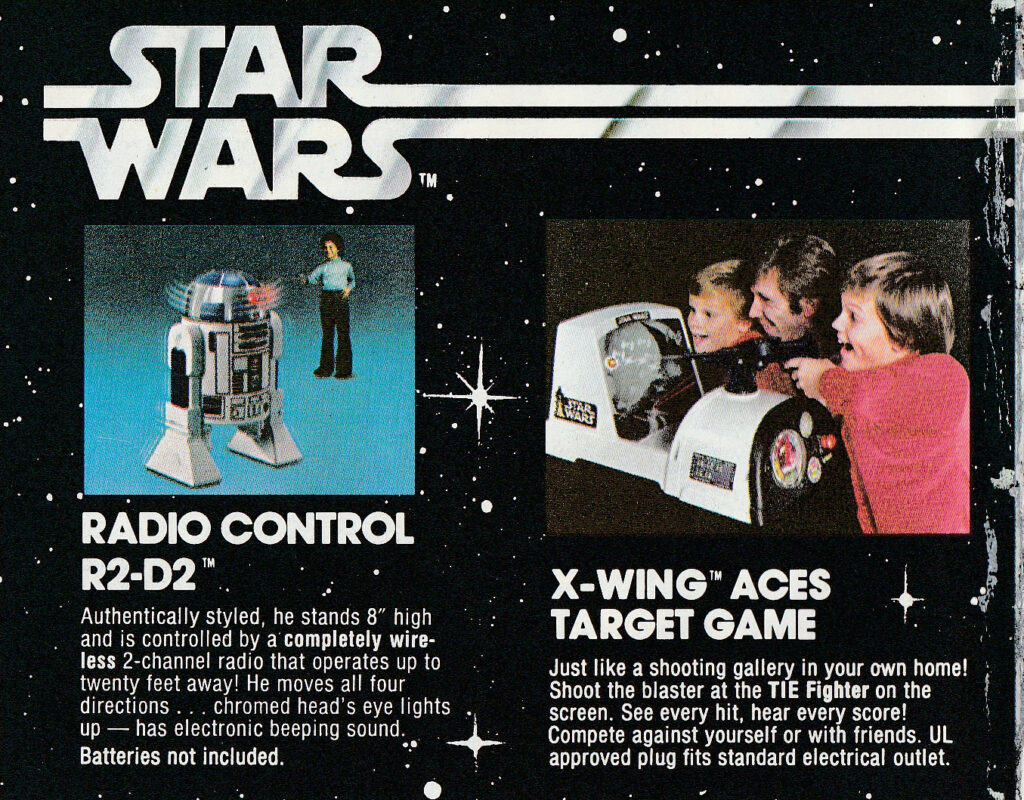
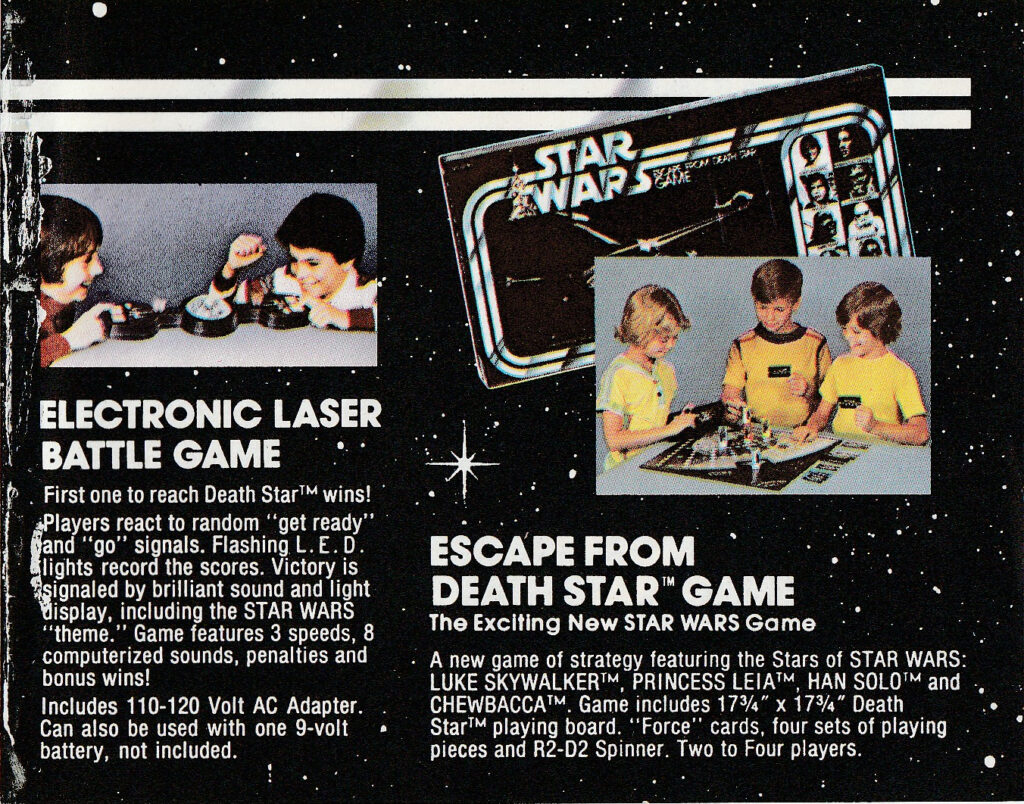
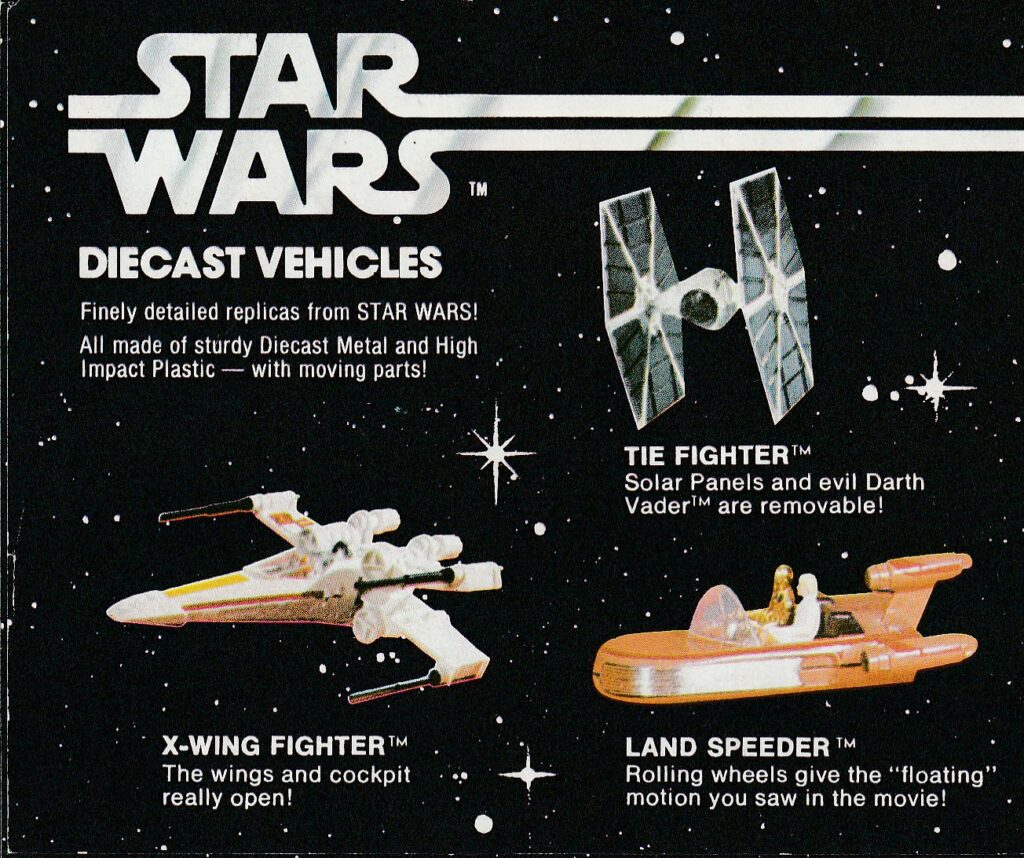
But because I’m me, you know I’m not just going to scan in the booklet and leave it at that!
Let’s take a look at some of the more interesting highlights of this blast from the past…
Little Differences
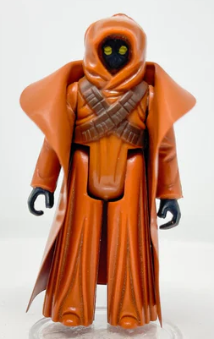
On the second page of the catalog, there’s one little thing that’s pretty cool.

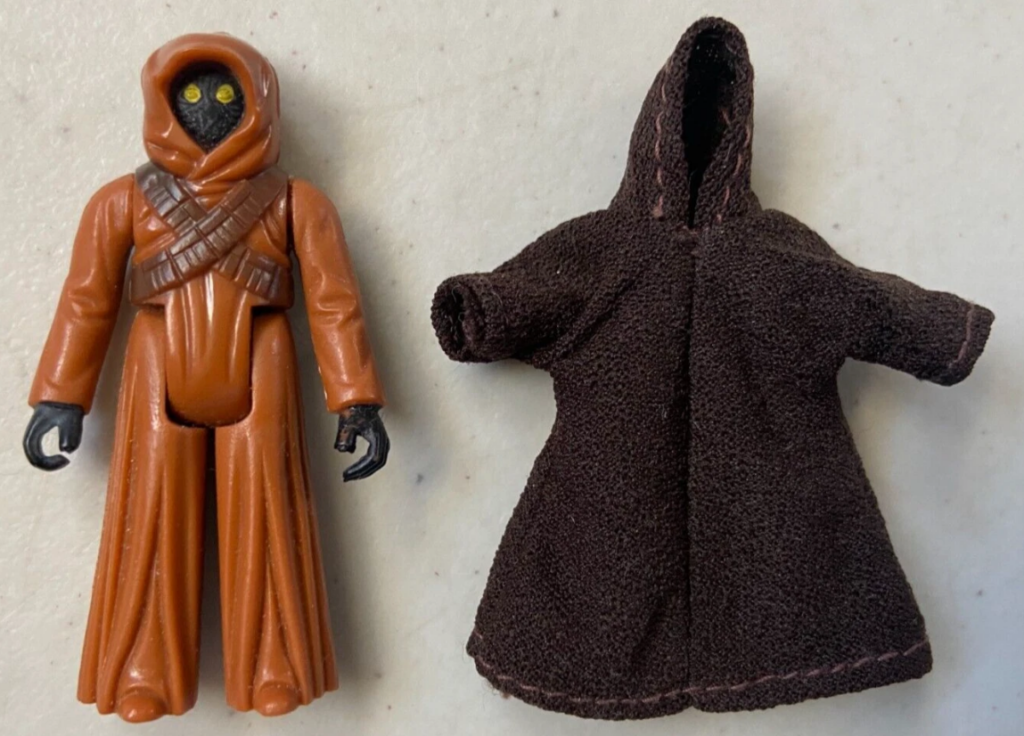
The Jawa figure in the catalog is known as the “vinyl cape Jawa”, the first iteration of the figure released. Vinyl capes weren’t unusual in the early Star Wars line – Darth Vader, Obi-Wan Kenobi, and Princess Leia all had vinyl capes. However, shortly into production, Kenner switched the Jawa’s cape from vinyl to a cloth robe. Their concern was that the price point for 2.25″ Jawa was the same as the other 3.75″ figures, so they didn’t think people would pay the same price unless they perceived the Jawa was a higher quality figure.
Personally, I think they made the right call considering the cloth robe of my vintage Jawa is still immaculate, while the vinyl cape of my Darth Vader figure is held together with electrician’s tape.
Because they made this switch, this obviously means that the vinyl cape Jawas are harder to come by and therefore worth more to collectors.
Here are the two figures side-by-side. As you can see, they’re both the same body figure; it’s just the cape/robe that changed.
The other interesting figure on this page of the catalog is the Death Squad Commander…
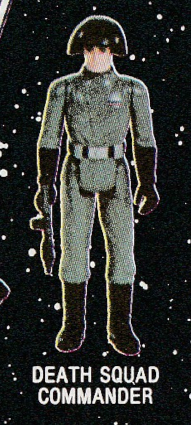
The Death Squad Commanders were soldiers seen running around in the Death Star during the first film. They weren’t named in the movie, so the action figures were the first time any of us knew what they were called.
While I’ve never heard that Kenner actually got complaints that they named a toy intended for children after a group of soldiers whose sole purpose is to hunt down and kill “undesireables”, by the time The Empire Strikes Back rolled around, the figure had been renamed “Star Destroyer Commander”. There were some Empire versions of the figure released with the Death Squad name, which makes their cardbacks – and carded figures – very valuable today.

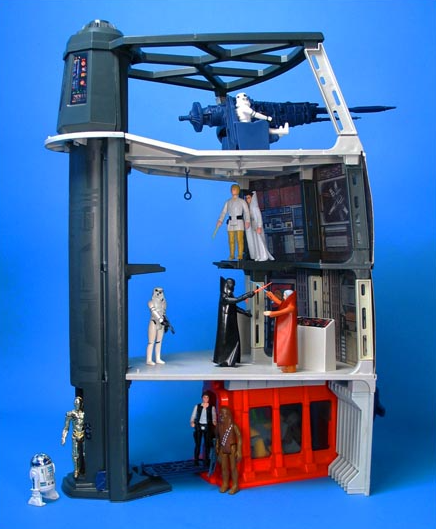
A little later on in the catalog, there’s a photo of the Death Star Space Station playset…
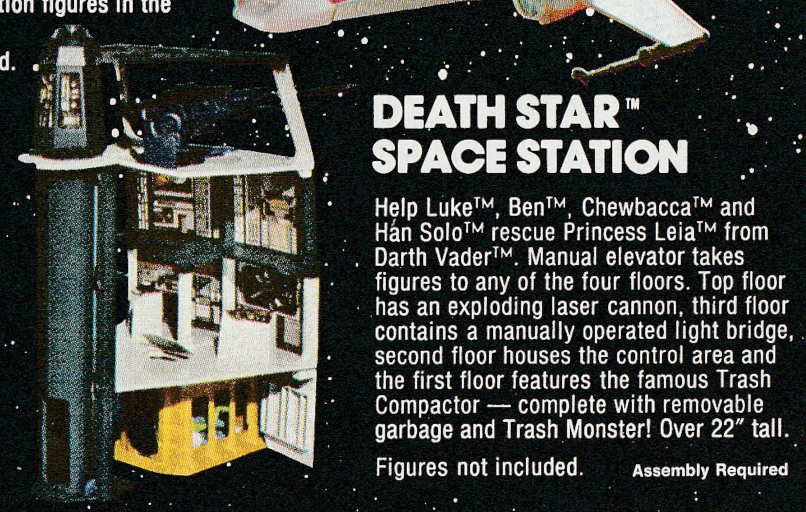
The plastic walls next to the trash compactor are different designs too, with the final product looking a little more like the stylized corridors of a space station.
It also appears that some of the designs of the cardboard “walls” might be different between the two versions. It’s kind of hard to tell if this is the case because of the low quality image in the catalog, but it’s a possibility.
Either way, it looks like a few changes were made between the catalog design and the final product.
It’s a very minor thing, but it jumped out at me immediately when I saw it in the catalog – the trash compactor section of the playset is shown here in yellow, but the final product released had the compactor in orange. Now, this could just be a color grading thing, but either way, I thought it was interesting.
Prototype Designs
Now it’s with these pink pages where things get really interesting.
Most of the toys featured on this spread appear to be fairly early prototypes.
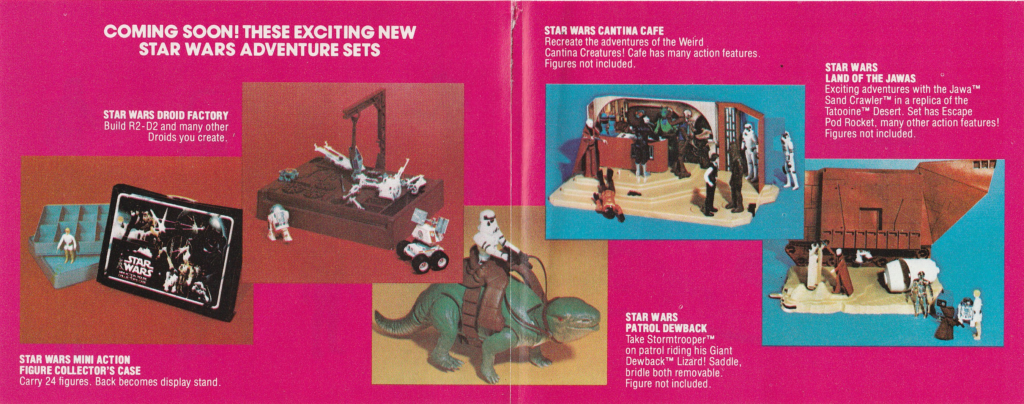
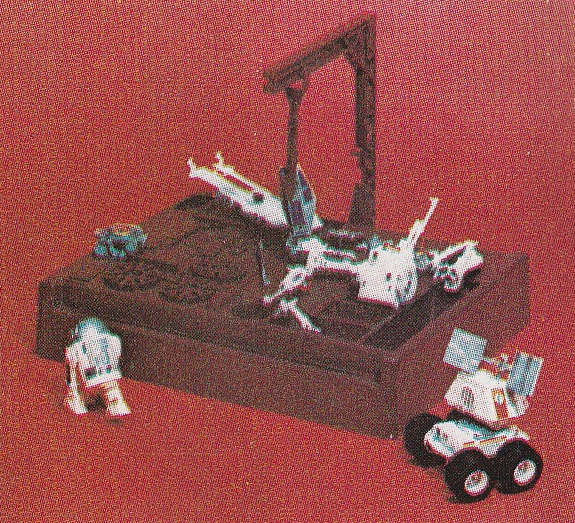
The first thing we have to look at is the Star Wars Droid Factory. The Droid Factory was released in 1979, however, as you can see from this photo of the box, it looks quite different from the photo in the catalog.
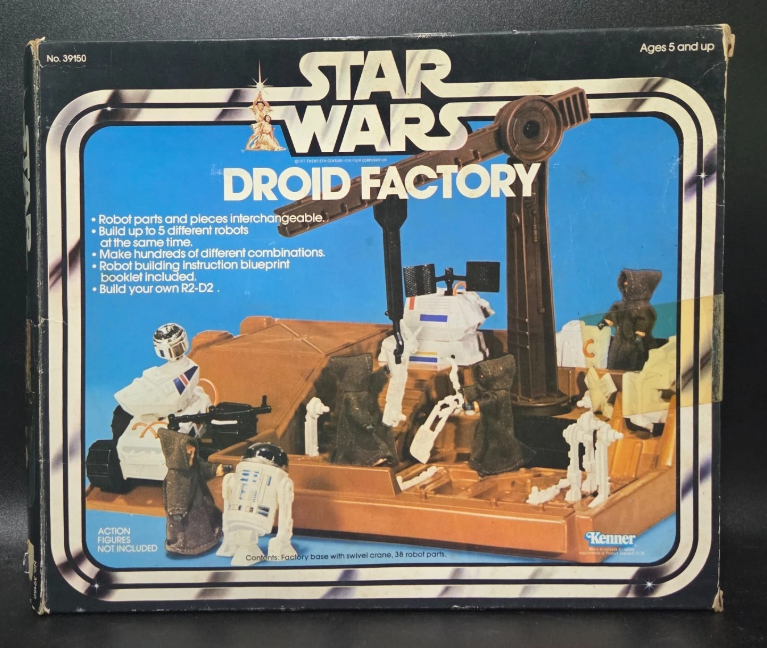
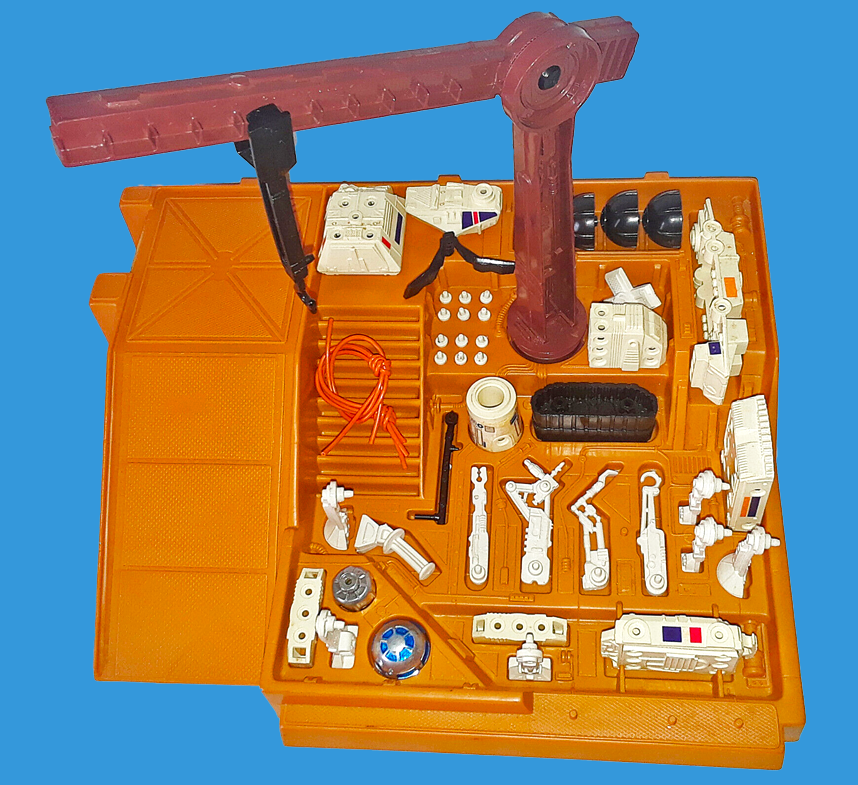
Really, other than the basic concept of using spare parts plucked out of the base of the toy by a crane in order to build your own droid, the two products look entirely different.
The final toy has a ramp down the left side, presumably where your newly-built droid would roll down and go on its merry way. The spare parts area and the crane are completely different between the two designs, as well.
It’s hard to tell from the catalog photo, but it would also appear that the droid parts were changed for the final product, too.
This one really is wildly different from the prototype.
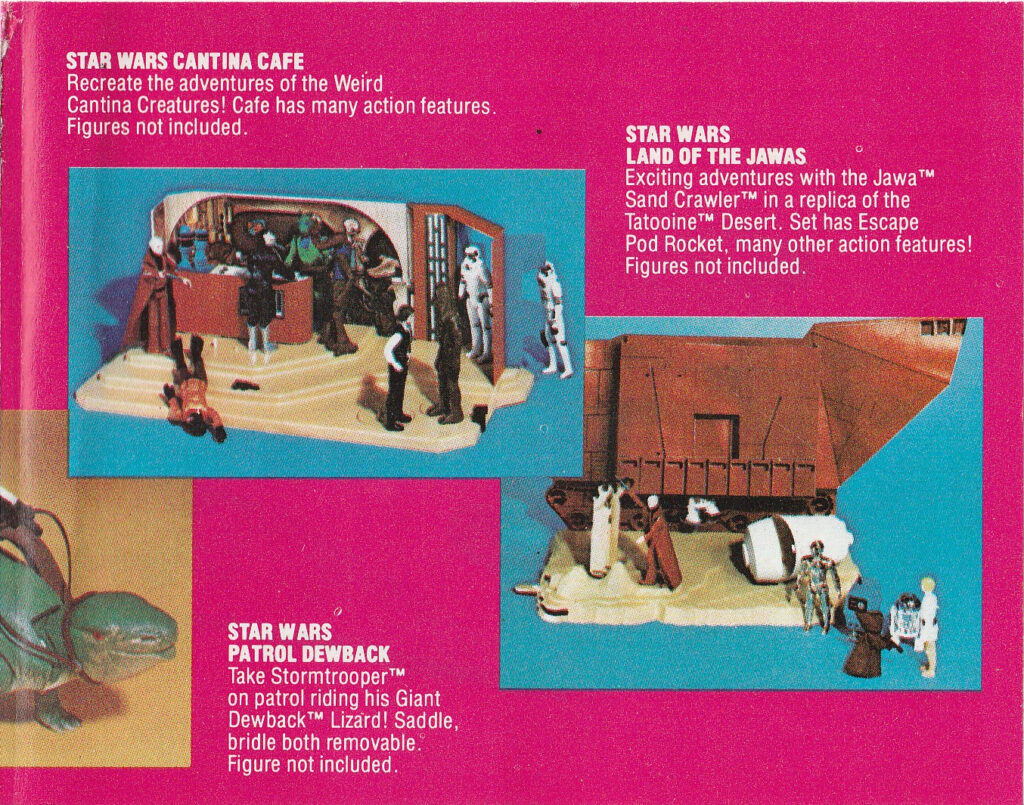
In the middle of the booklet we have the Patrol Dewback, a miniature version of the giant lizards the Stormtroopers rode on while they were searching for the Death Star plans on Tatooine.
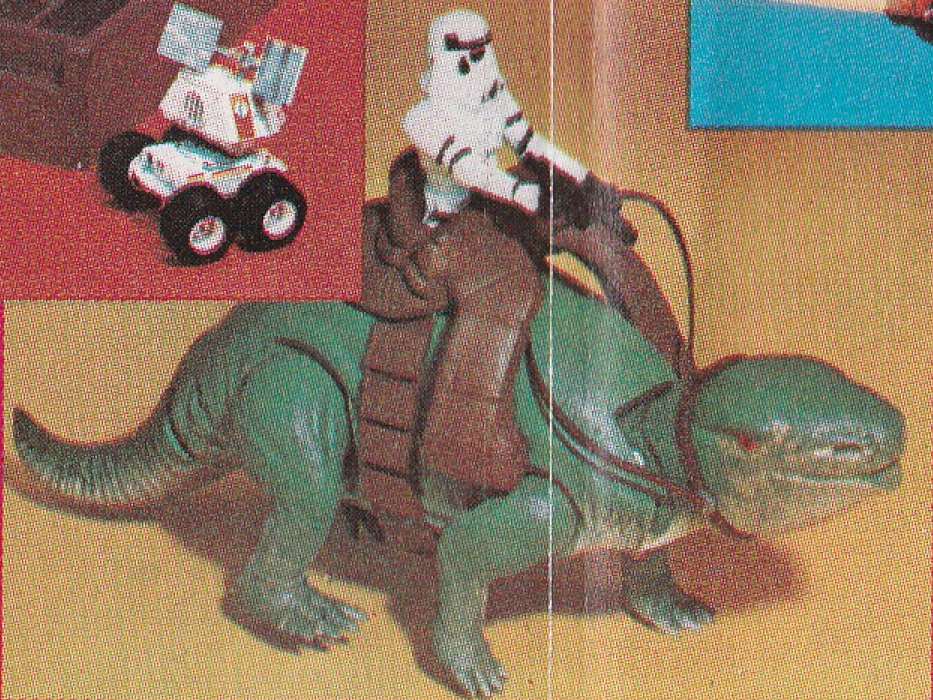
And here’s the toy that was released in stores…
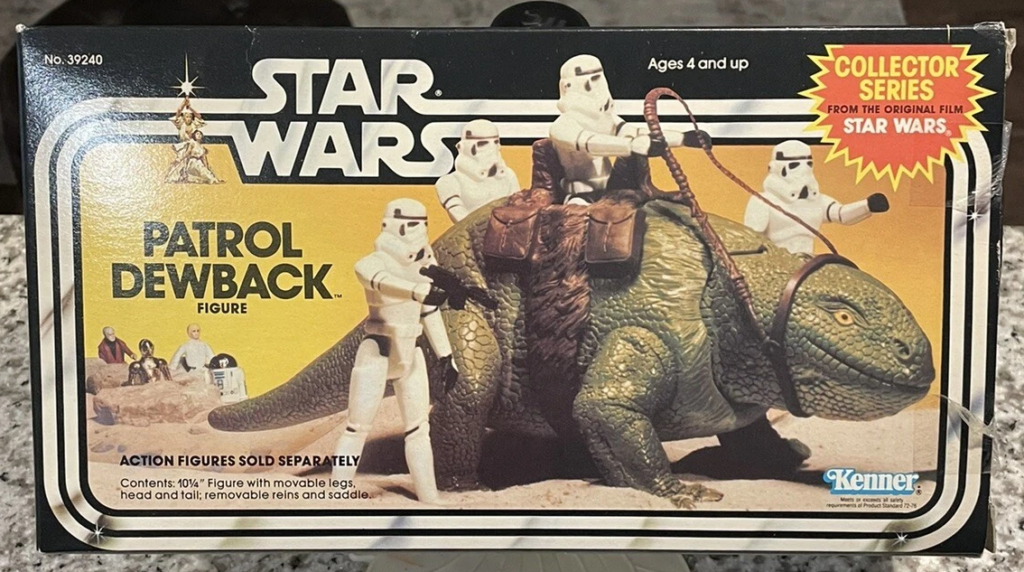
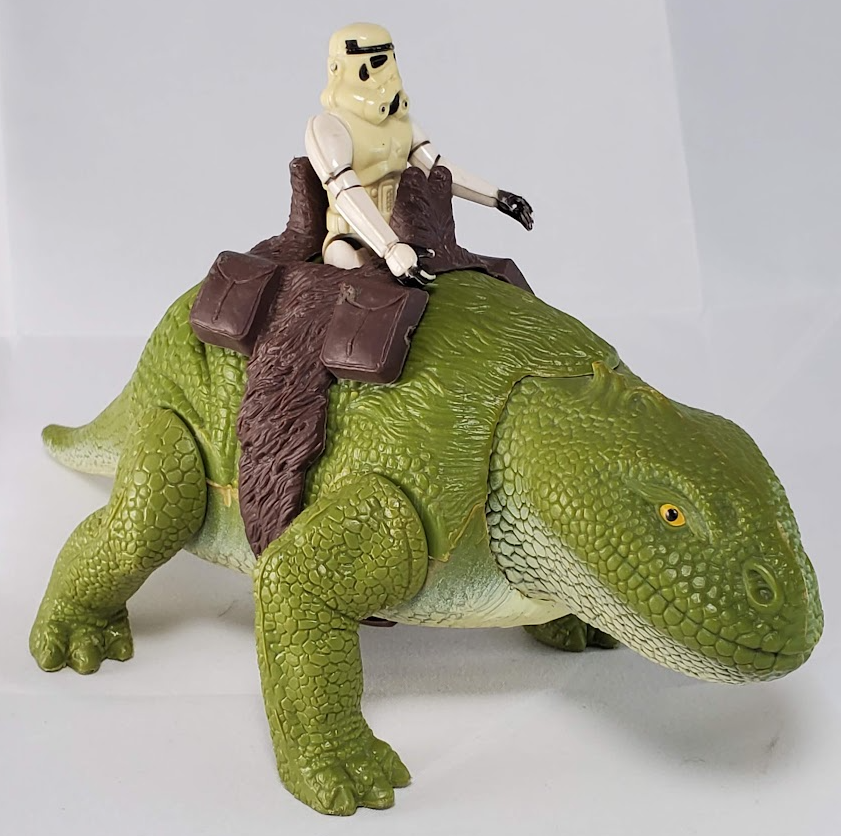
Much like the Droid Factory, the same elements are there – giant, green lizard, brown saddle and harness, and a Stormtrooper figure held inside the body of the Dewback thanks to a spring-loaded door – but the devil is in the details.
As you can see from my childhood Dewback, the final mold of the animal’s body appears to be a combination of scales and hair. In contrast, the prototype looks like a standard, smooth-skinned dinosaur toy straight off the shelf. While it’s impossible to know for sure, it also looks like the prototype’s head moved up and down, whereas the toy that was released had a head that moved side to side when you swung the tail back and forth.
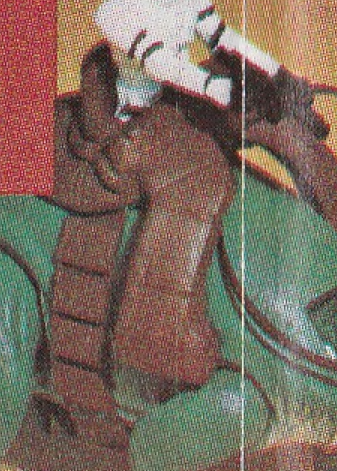
The “legs” on the saddle, molded into the plastic to give the illusion of the rider’s legs, are very prominent on the prototype, almost comically so.
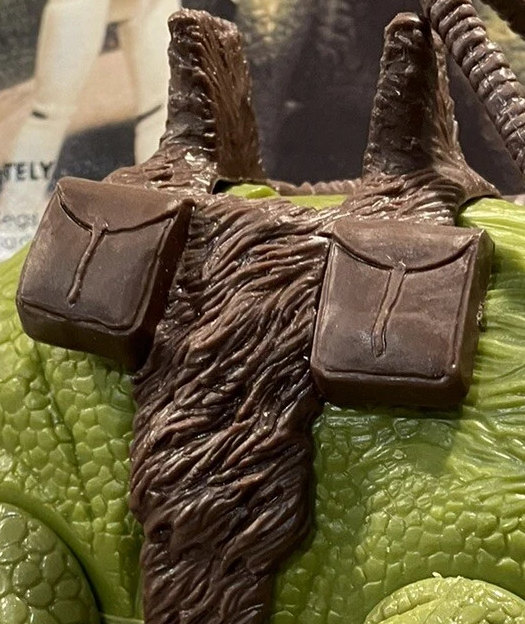
The final toy’s saddle had what could be interpreted as molded legs hidden by the fur covering the saddle, but they’re nowhere near as clearly sculpted as the ones on the prototype.
I also quite like the saddlebags they added to the final version.
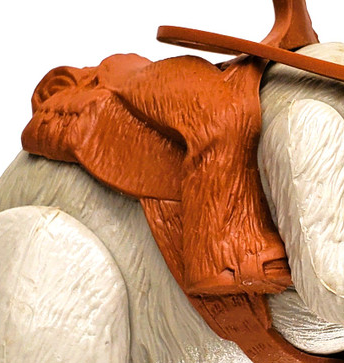
Kenner would return to the “sculpted legs on the saddle” idea with the Tauntaun figure released for The Empire Strikes Back. While they’re not as egregious as the legs on the prototype Dewback, they definitely leaned into it, complete with stirrups…
Next up in prototype row, we have the Star Wars Cantina Cafe playset.
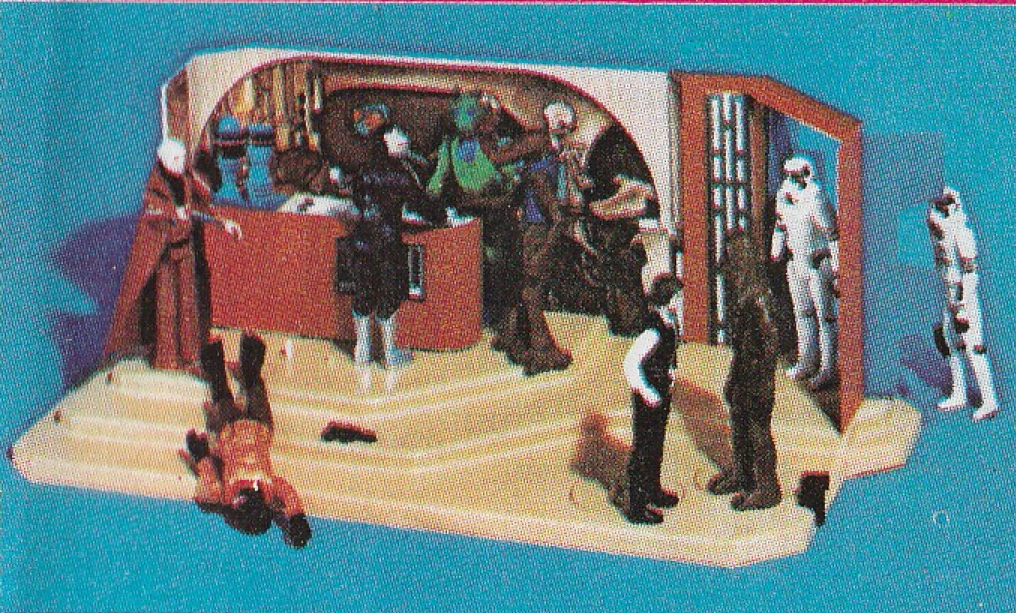
There were two versions of the Cantina playset released in stores…sort of.
Kenner had a partnership with Sears that gave them the option to release exclusive versions of some Star Wars toys, including an early version of the toy based on the infamous cantina scene from the film. The Sears version was called The Cantina Adventure Set:
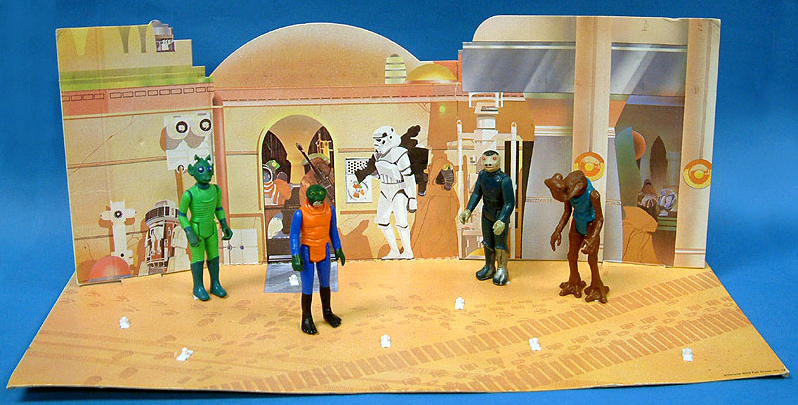
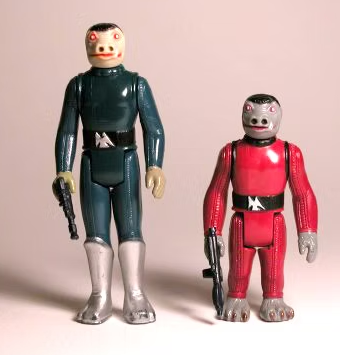
The Sears version was little more than a cardboard backdrop, but it came with four figures – Greedo, Walrus Man, Hammerhead, and, most notably, Snaggletooth.
Snaggletooth was sculpted based solely on a photo from the waist up, so Kenner made him 3.75″ tall, the standard height for most Star Wars figures. However, Lucasfilm had intended for Snaggletooth to be a much smaller character. So, after his introduction in the Sears Cantina, Snaggletooth was shrunk down for the mass market release and his outfit was changed from blue to red. Because he only saw a fairly limited release window, the blue Snaggletooth that was only found in the Sears Cantina is worth a lot more than the red Snaggletooth that most of us owned.
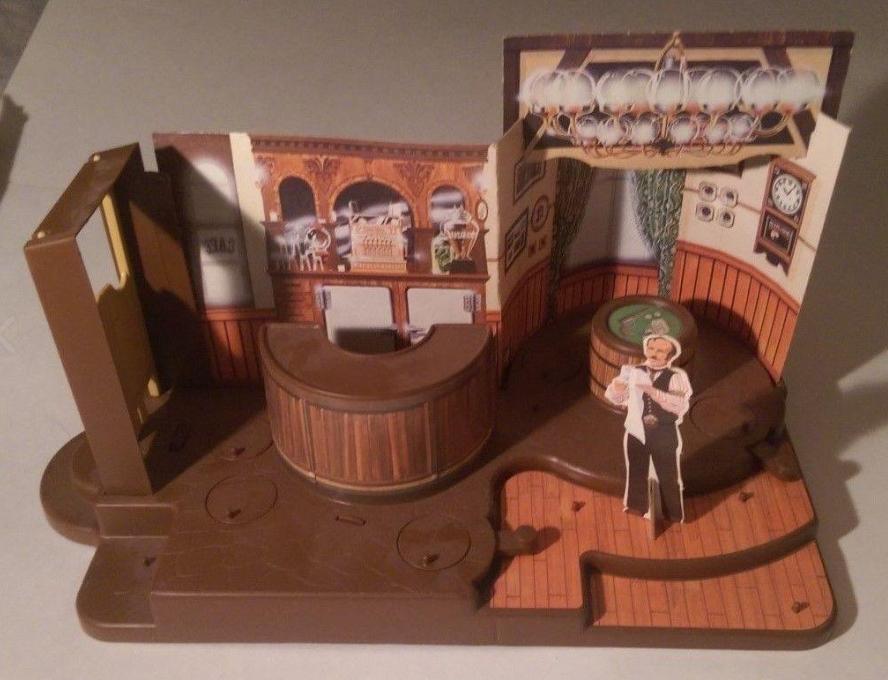
The wide release of the Creature Cantina Action Playset, which most closely resembles the prototype shown in the catalog, was released in 1979.
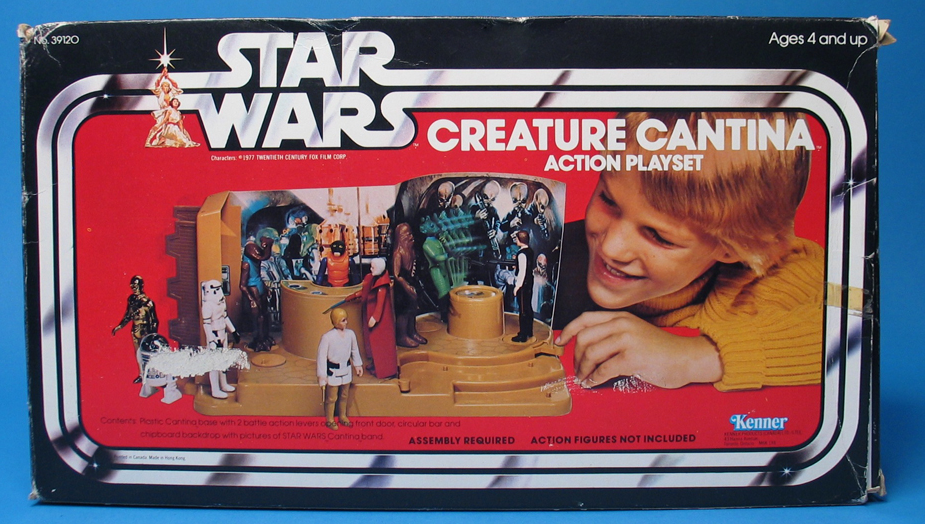
Once again, the basic features are found in both the prototype and the final toy – a bar, a doorway, stepped platforms, and a cardboard backdrop – but the designs are very different.
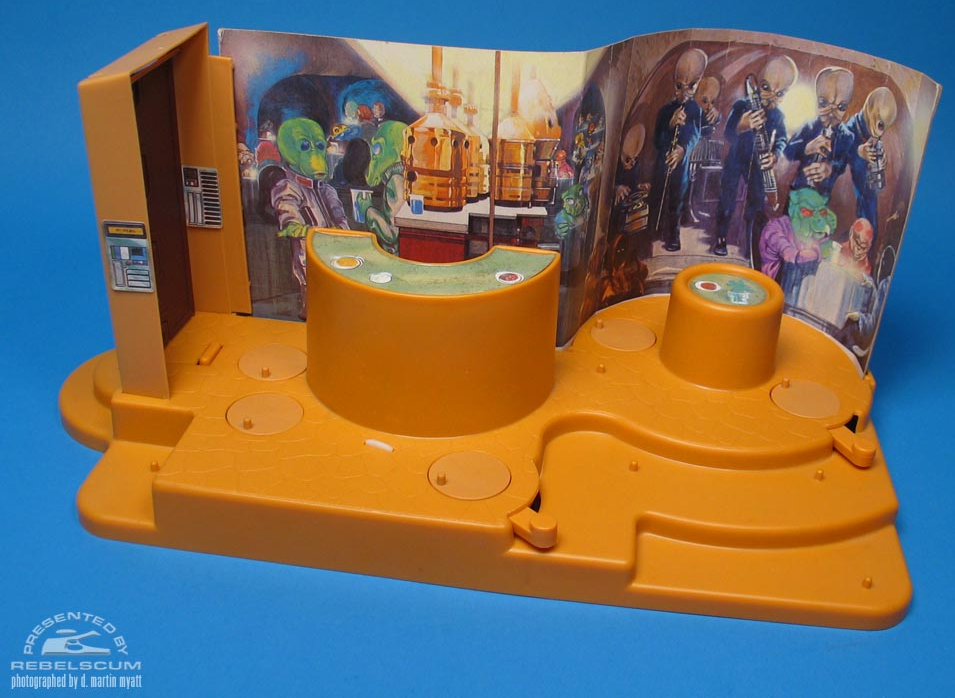
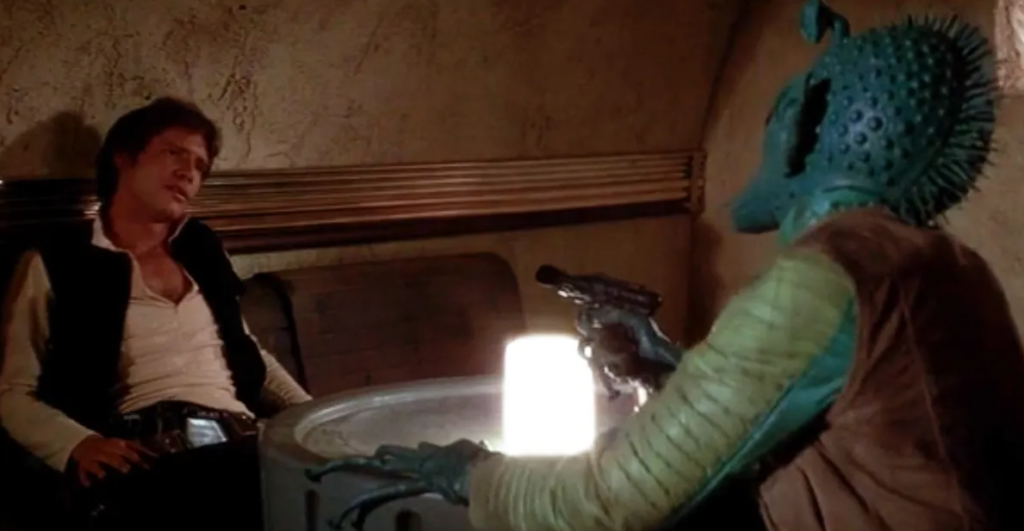
For one, the swinging door is on the right side in the prototype, but was moved to the left side for the final toy. This gave the designers room to include the round booth where Han Solo had his meeting with Greedo and he obviously shoots first.
The stepped platforms are also a little more organic than in the prototype. I’m not sure if that’s really screen-accurate, but I always felt like it was a nice touch for this playset.
And, of course, the cardboard backdrop has artwork that was more specific to the scene from the movie, featuring Figrin D’an and the Modal Nodes, the famous “jizz” band playing that song we all know and love.
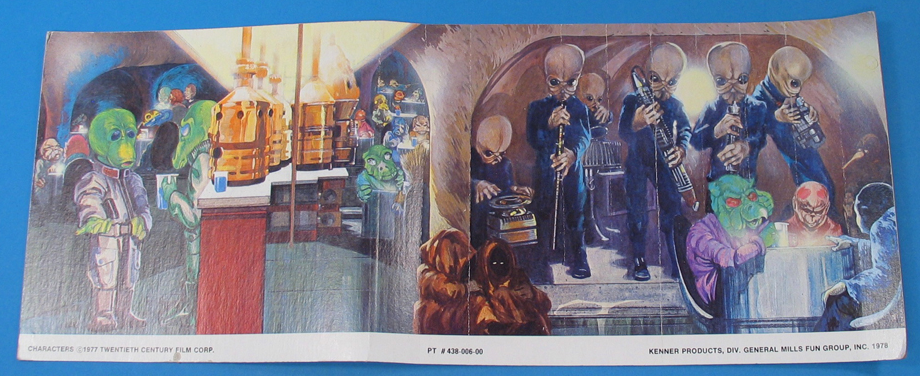
Unlike the Sears Cantina version, the Creature Cantina set did not include any figures. Although I do find it really wild that the blue Snaggletooth figure is shown in this prototype photo!
The commercially released Cantina playset was later reused for the Western Cafe Action Playset, from Kenner’s Real West toy line released in 1980, that featured 3.75″ toys based on famous cowboys from history. It’s kind of fitting, really, since Lucas envisioned Star Wars as a Sci-Fi Western.
The last prototype in this section of the catalog is the Land of the Jawas playset…
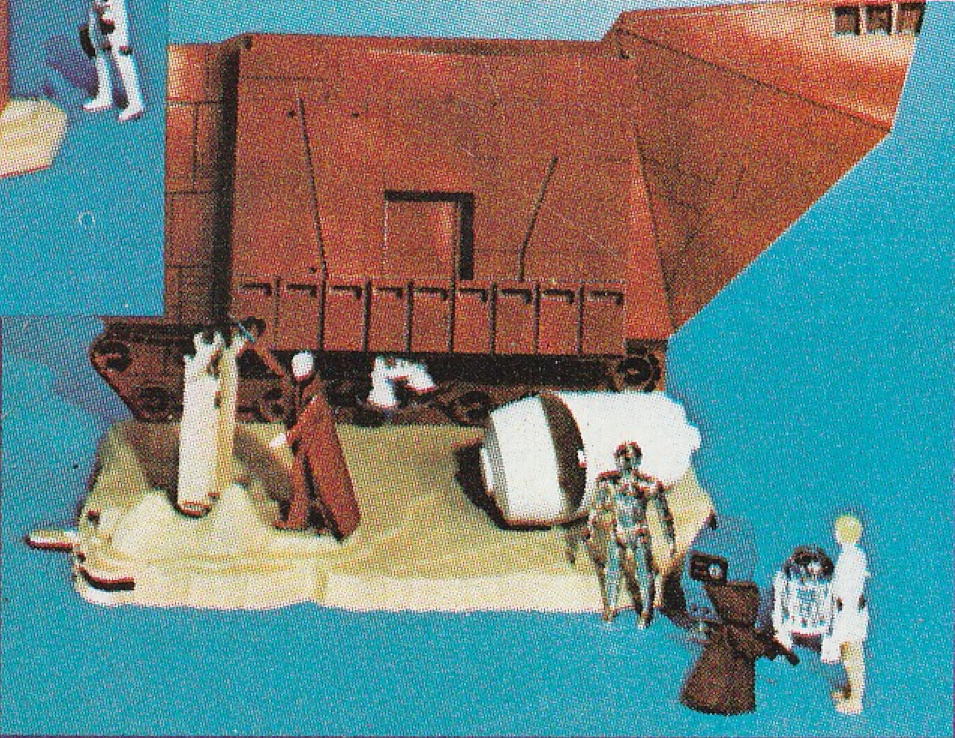
This playset featued a plastic base with a few rotating pegs for action figures to stand and move on, an escape pod that could fit a couple of droids inside, and a cardboard backdrop of a Sand Crawler, the Jawa equivalent of an RV.
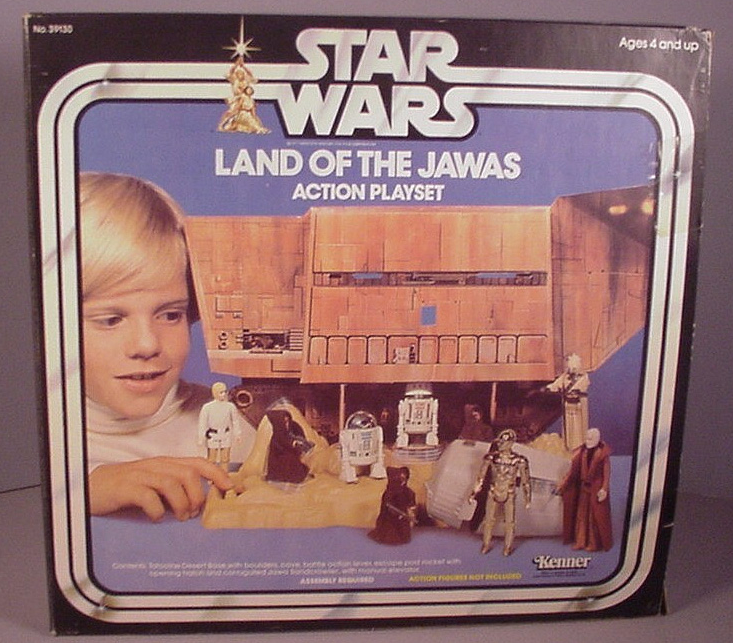
The toy was released in 1979 and would look pretty close to the prototype shown in the catalog.
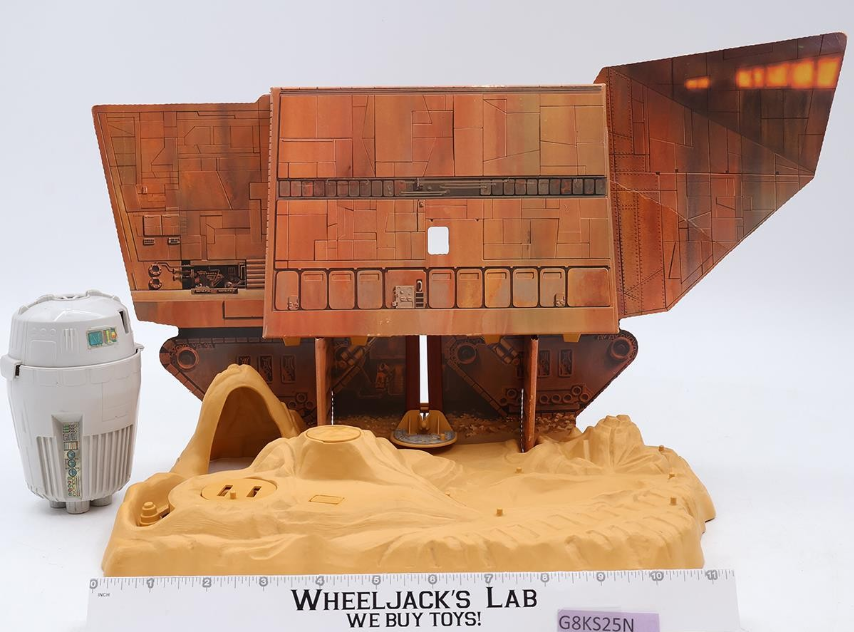
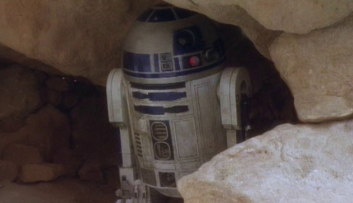
As you can see, there are aspects on the backdrop that are different – smaller square in the center, the details are a lot better, the windows at the top are painted to look like they’re lit up – but they’re basically the same. The plastic base has quite a few more details in the final version, especially the addition of a small cave in the background where kids could recreate this scene of a frightened R2-D2 hiding among the rocks.
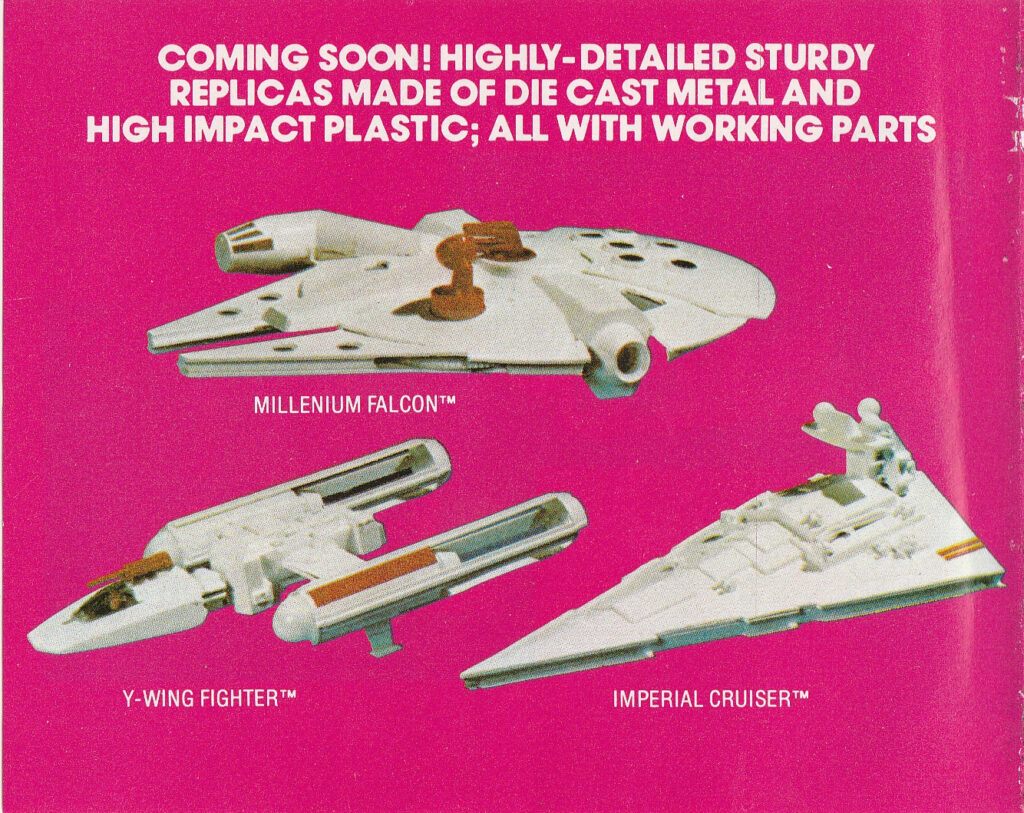
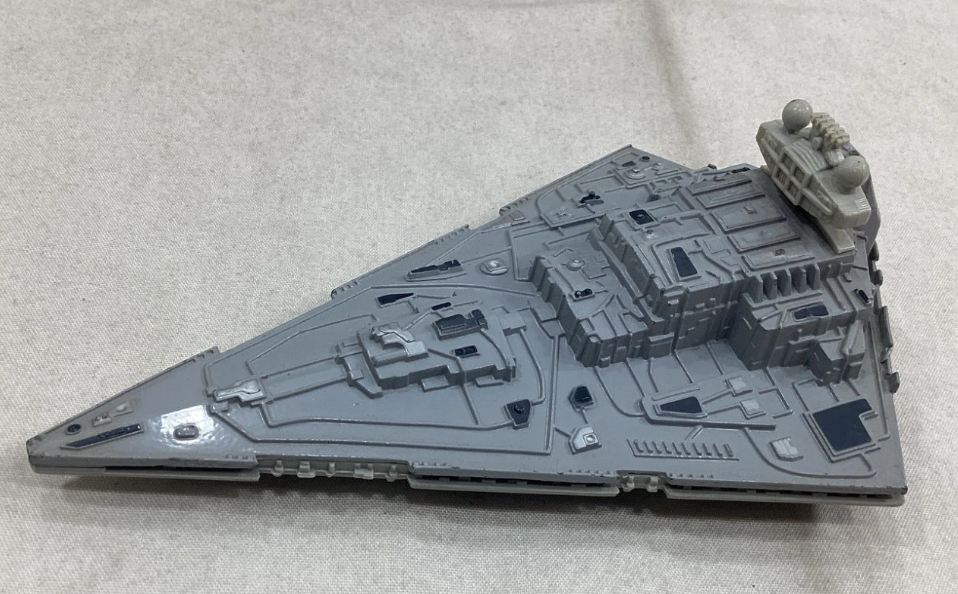
Finally, we have the last page of prototype toys, featuring die cast metal miniature versions of the “Millenium” Falcon, the Y-Wing Fighter, and an Imperial Cruiser…
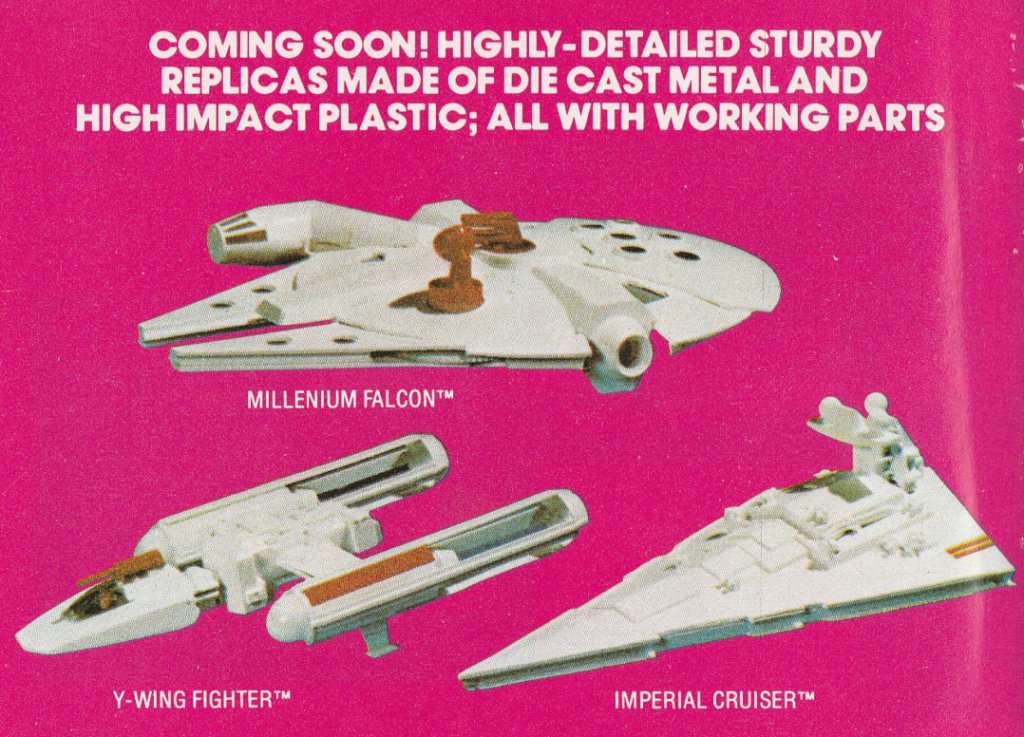
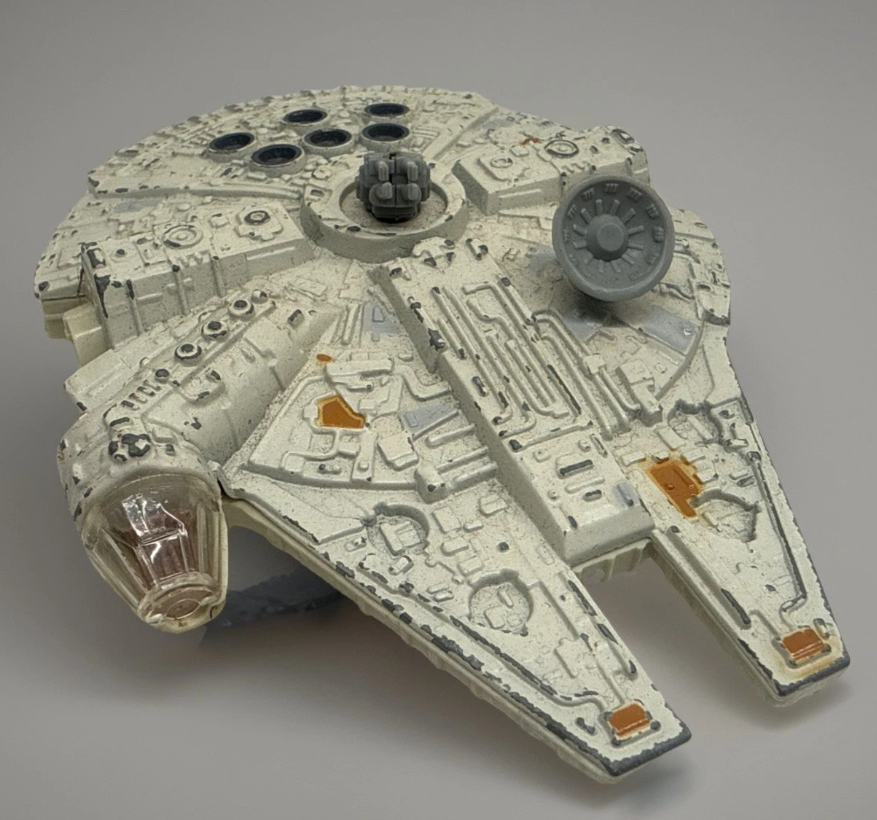
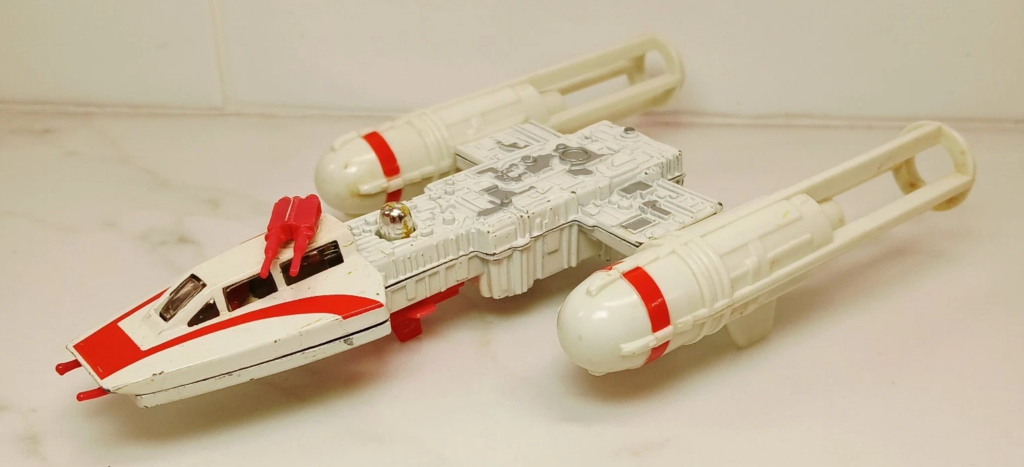
Kenner released die cast metal ships in 1979, but the entire line up featured more detailed sculpts and more screen-accurate paint jobs than the ones in the catalog:
These catalogs are a really fun piece of Star Wars ephemera to collect. They aren’t worth a lot – the same one I have recently sold on eBay for $12 – but they are a wonderful snapshot of a time before the internet, when flipping through these tiny pages was the only way an enthusiastic Star Wars kid could find out what would soon be found in the toy aisle. I remember sitting down with some of these catalogs before Christmas and telling my mom the names of the playsets, vehicles, and figures that I hoped would be under the tree, and she would write them down and keep that list in her purse for when she went out shopping. Little did I know until just now that sometimes Kenner was hyping up these new toys before they were even finalized designs, confirming just how much demand there was for new Star Wars stuff.