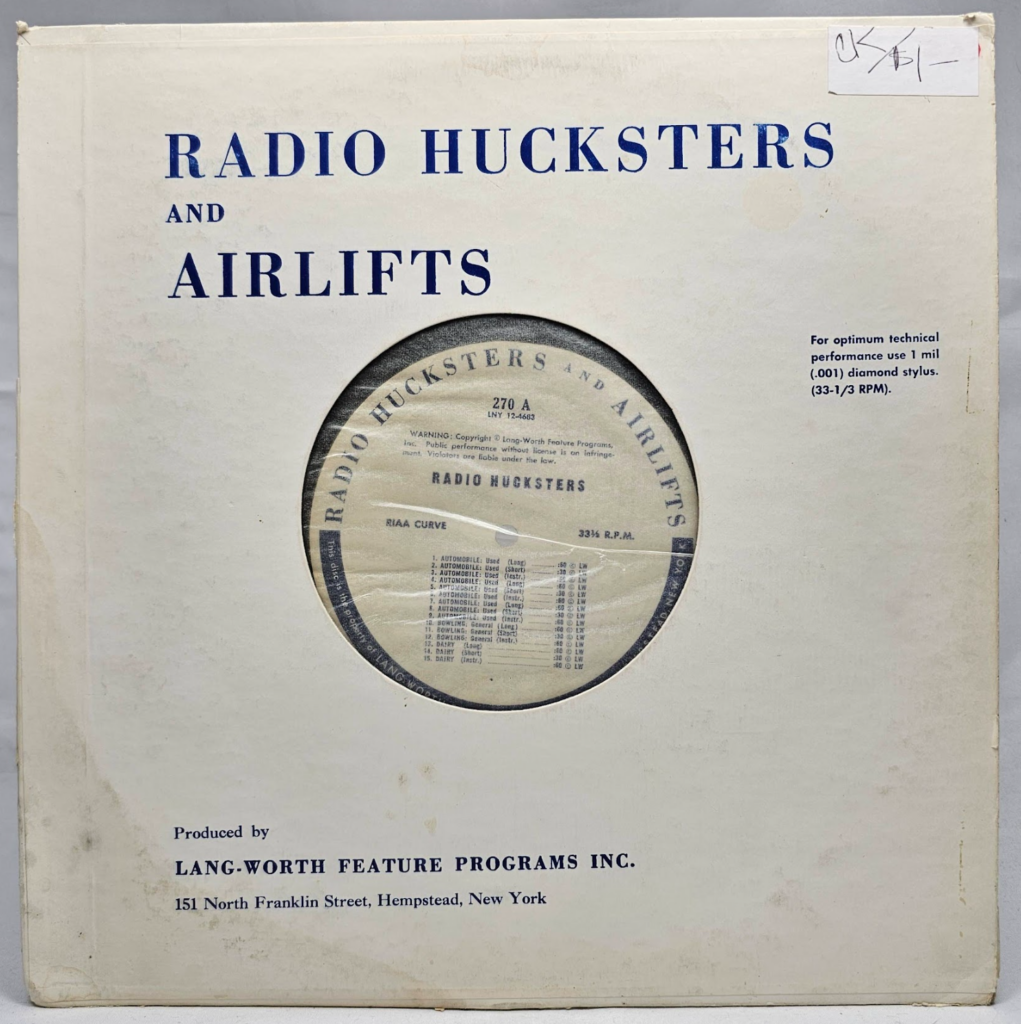
Recently, I was digging through the record crates at a Savers thrift store. Here in suburban St. Louis, it’s rare that I find anything other than Johnny Mathis, Christmas compilations, and Conway Twitty. But every once in a while, I’ll find an unusual record that’s worth spending a buck or two on, just to see what the heck it is. And during this trip to Savers, I found a really cool, 2 buck oddity.
In 1933, Cyril Langlois (Lang-goyce) and Ralph Wentworth founded the Lang-Worth record label to sell transcription discs. Transcription discs were records of syndicated radio programs that a station could play instead of having a live DJ, usually during off-hours or on holidays when fewer people were listening to the radio.
You can think of them sort of like late night cable infomercials back in the 80s and 90s – programming used to fill air time so they can keep selling ads. However, instead of trying to sell the SlapChop or Foreman Grill, these programs came in a variety of styles, like informational newsreels, interviews with famous people, entertainment shows like the early soap opera “Aunt Mary”, and pre-recorded performances, like concert symphonies or holiday tunes.
Stations would subscribe to a transcription service and receive fresh records filled with these syndicated programs every week. If they liked a record and wanted to play it again, the station would pay a continuous licensing fee for keeping it in their library, however, they never actually owned the recording. Once they were done with it, they sent the record back to the transcription company and they weren’t charged for it anymore.
Eventually, these transcription companies began producing 30 and 60 second advertising spots for large companies that were then easily distributed to affiliate stations. Later, they also produced advertising records like the one I picked up at the thrift store.
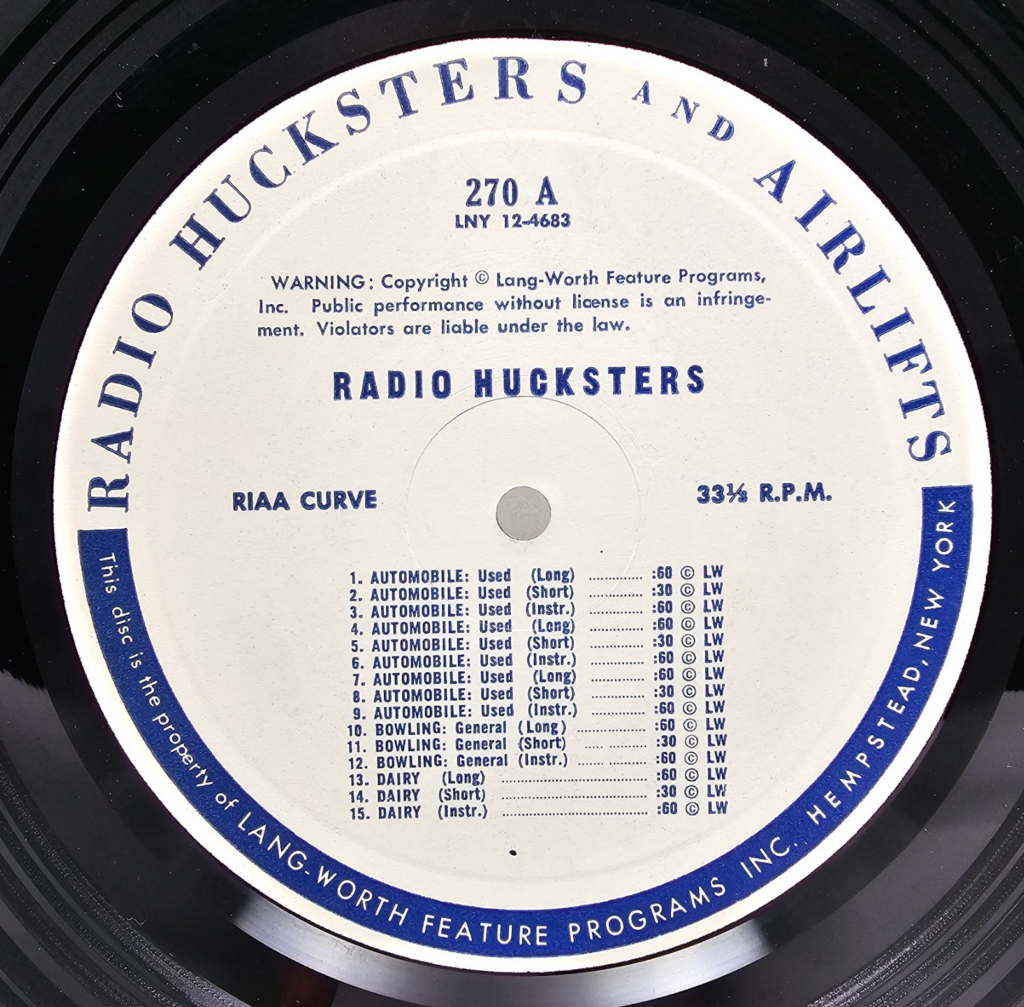
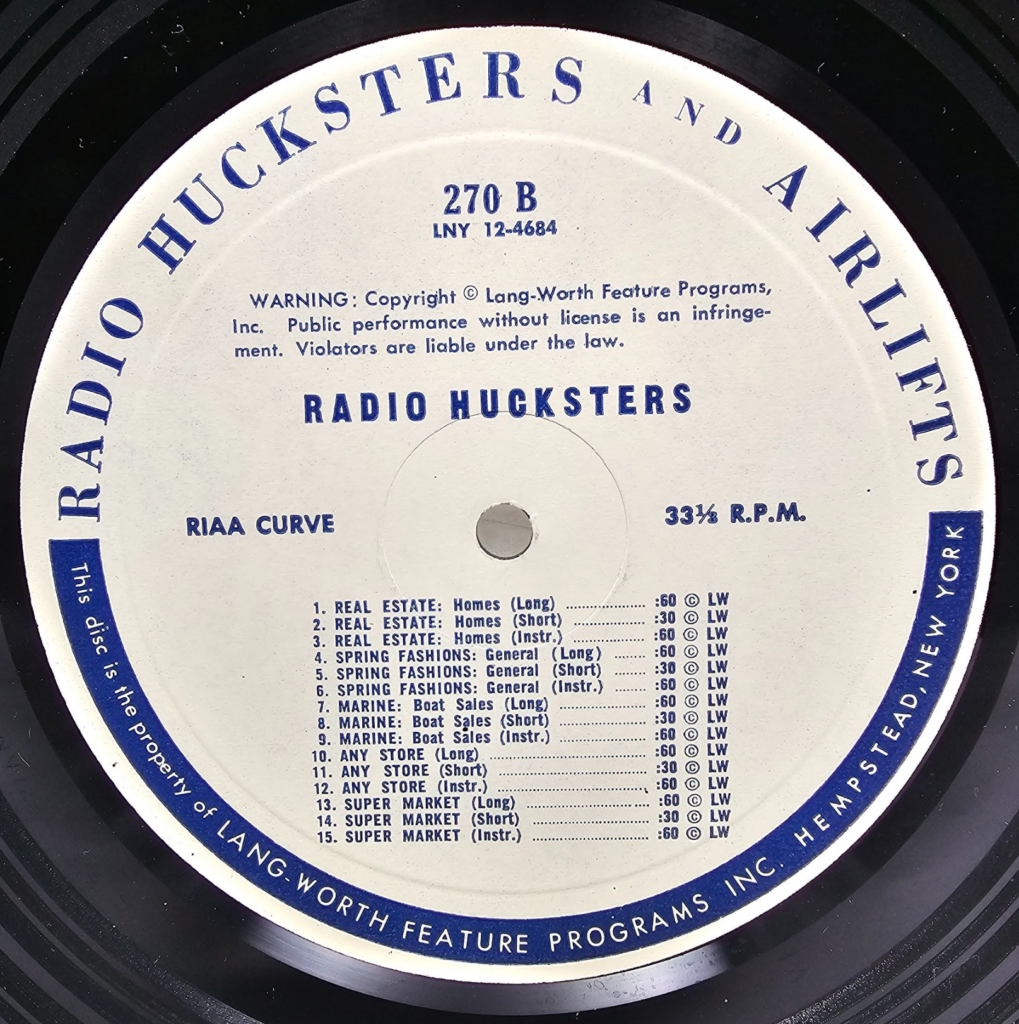
The record is called Radio Hucksters, released in 1953, and contains 30 tracks that could be used to produce in-house advertisements. The album is broken into categories depending upon the product or type of store you wanted to promote. For example, the categories on this record include used cars, bowling alleys, dairy products, real estate, spring fashions, boats, super markets, and a generic store, like a hardware store or five-and-dime.
The idea here is that you have some professionally produced music, featuring live instruments and a choir of people singing catchy, but generic, jingles for the product or service you’re looking to promote. Then, in the middle of the track, just the background music plays, giving your DJ the opportunity to read off advertising copy that’s more specific for the local company buying the ad space. Then the choir comes back and plays us out.
Each song came in three styles – a 60-second track, complete with the choir singing jingles that follow the product/service theme; a 30-second track that doesn’t feature as much instrumental music in the middle, but still has the jingle; and a 60-second instrumental track with no choir singing, so it could be used for any type of product/service.
I’m sure Lang-Worth Records was cranking these albums out, but there aren’t that many available online. The record database site Discogs only shows six Huckster albums and the one I have isn’t even listed. There are 10 available to stream on Archive.org and only a handful on YouTube. These albums were only made for radio stations, not the general public, so their distribution was pretty limited.
And I have a feeling these records were probably seen as fairly disposable, too. As music styles and tastes changed over the years, these old records would be retired and could have literally been thrown away. My guess is the remaining copies out there were taken home by radio station employees who just thought they were kind of cool.
If you’d like to listen to Radio Hucksters, I’ve made it available over on my podcast, The Space Monkey X Audio Workshop. I split it into two episodes – one that is essentially the same information in this blog post (link), but also a separate episode that is just the music (link).